

Blog
2026-4-3
What is an Over/Under Voltage Protector? Complete Guide & Product Specifications
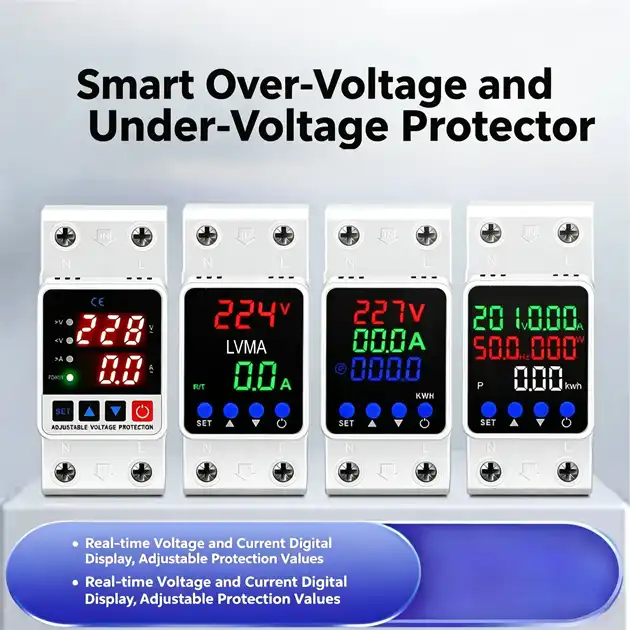
In an era of growing reliance on electrical equipment—from household appliances to industrial machinery and photovoltaic systems—voltage instability has become a major threat to device safety and lifespan. Power fluctuations, lightning-induced surges, grid switching, and sudden load changes often cause overvoltage or undervoltage, leading to equipment burnout, circuit damage, costly downtime, and even fire hazards. This is where an Over/Under Voltage Protector (OVP/UVP) comes in: a smart electrical safety device designed to monitor, protect, and ensure stable power supply for your valuable equipment. In this guide, we’ll break down what an over/under voltage protector is, how it works, its key product specifications, and why it’s a must-have for homes, businesses, and industrial settings worldwide.
What is an Over/Under Voltage Protector?
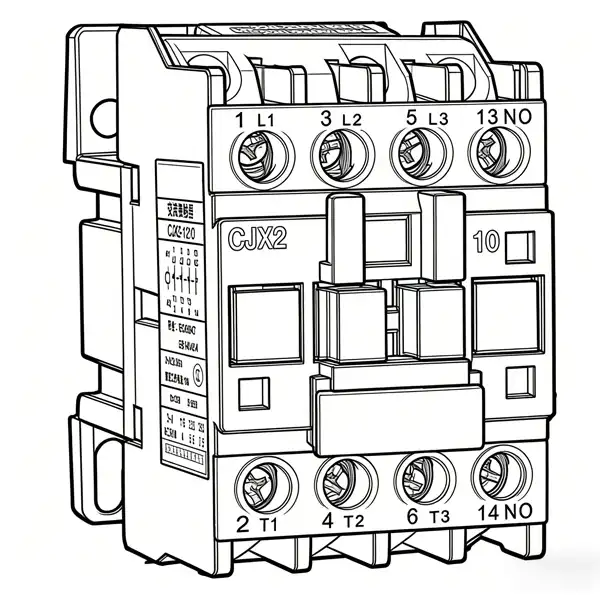
An over/under voltage protector is an intelligent electrical protection device that continuously monitors the incoming voltage level of a power circuit. When the voltage exceeds a safe upper limit (overvoltage) or drops below a safe lower limit (undervoltage), the protector automatically disconnects the power supply to prevent damage to connected equipment. Once the voltage returns to the normal, safe range, most models will automatically reconnect the power (auto-reclosing function) after a preset delay—eliminating the need for manual reset and ensuring uninterrupted operation for unattended systems like photovoltaic setups or remote industrial equipment.
Unlike traditional circuit breakers or fuses, which only protect against short circuits and overloads, over/under voltage protectors focus specifically on voltage stability—filling a critical gap in electrical safety. They are widely used in residential, commercial, and industrial applications, including household distribution panels, solar photovoltaic systems, electric vehicle charging stations, office buildings, and unattended server rooms.
How Does an Over/Under Voltage Protector Work?
The core of an over/under voltage protector lies in its built-in voltage detection module and intelligent control system. Here’s a step-by-step breakdown of its working principle:
-
Real-Time Voltage Monitoring: The protector continuously scans the incoming voltage, comparing it to preset safe thresholds (adjustable on most models).
-
Overvoltage Protection: When the voltage exceeds the preset upper limit (e.g., 270-300V AC for residential use), the protector triggers an immediate power cut. Overvoltage is often caused by lightning strikes, grid switching, neutral line faults, or sudden load drops—all of which can burn circuit boards, damage inverters, and destroy electronic components.
-
Undervoltage Protection: When the voltage drops below the preset lower limit (e.g., 140-170V AC for residential use), the protector also cuts off power. Undervoltage typically results from grid overload, long-distance power transmission losses, poor line connections, or temporary blackouts—leading to motor overheating, relay failures, and system instability in appliances like refrigerators, air conditioners, and pumps.
-
Auto-Reclosing & Delay Function: After the voltage returns to the safe range, the protector waits for a preset delay (30-300 seconds, adjustable) to avoid frequent tripping from transient voltage fluctuations. It then automatically reconnects the power—critical for unattended systems like solar energy setups or remote industrial equipment.
-
Overcurrent Protection (Optional): Many advanced models also integrate overcurrent protection, which cuts power if the current exceeds the rated capacity (caused by equipment overload or short circuits). This all-in-one design provides comprehensive protection for sensitive equipment.
Key Product Specifications (2026 Updated)
When choosing an over/under voltage protector for your home, business, or industrial project, understanding the key specifications is essential. Below are the standard and customizable parameters for our high-quality over/under voltage protectors—designed to meet global standards (CE, RoHS) and adapt to diverse market needs:
|
Parameter
|
Standard Specifications
|
Customizable Options
|
|---|---|---|
|
Rated Voltage (AC)
|
220V/230V (Single-Phase); 380V (Three-Phase)
|
110V, 240V, 400V
|
|
Rated Frequency
|
50Hz / 60Hz (Dual Frequency)
|
Customizable for regional power grids
|
|
Rated Current
|
32A, 40A, 63A, 80A, 100A
|
10A-200A (Based on application needs)
|
|
Pole Type
|
1P+N, 2P, 3P+N, 4P
|
Custom pole configurations
|
|
Overvoltage Threshold
|
240V-300V (Adjustable, Default: 275V±5V)
|
220V-330V (Customizable)
|
|
Undervoltage Threshold
|
140V-200V (Adjustable, Default: 170V±5V)
|
120V-220V (Customizable)
|
|
Overcurrent Threshold
|
Adjustable (Based on rated current)
|
Customizable trip current
|
|
Auto-Reclosing Delay
|
30-300 Seconds (Adjustable)
|
1-600 Seconds
|
|
First Power-On Delay
|
30±10 Seconds
|
10-60 Seconds
|
|
Operating Temperature
|
-25℃ to +75℃
|
-40℃ to +85℃ (High-Temperature Resistant Model)
|
|
Mechanical Life
|
≥ 100,000 Operations
|
≥ 150,000 Operations (Premium Model)
|
|
Impulse Withstand Voltage
|
4KV (Meets Class III Electrical Safety Standards)
|
6KV (Lightning Protection Enhanced Model)
|
|
Installation Type
|
35mm DIN Rail Mount (Standard for Electrical Cabinets)
|
Wall-Mounted, Plug-and-Play (Residential Models)
|
|
Certifications
|
CE (LVD-2014/35/EU + EMC-2014/30/EU), RoHS
|
UL, FCC, ISO (Customizable for Target Markets)
|
|
Power Consumption
|
≤ 2W (Energy-Saving Design)
|
≤ 1W (Ultra-Energy-Saving Model)
|
Why Choose Our Over/Under Voltage Protector?
In a competitive market, our over/under voltage protectors stand out for their reliability, versatility, and compliance with global standards. Here’s what makes our products the top choice for importers, distributors, and end-users worldwide:
-
Comprehensive Protection: Integrates overvoltage, undervoltage, and optional overcurrent protection—all in one compact device. Ideal for both residential and industrial applications, including photovoltaic systems, electric vehicle charging stations, and unattended equipment.
-
Intelligent & User-Friendly: Adjustable voltage thresholds and auto-reclosing delay make it easy to adapt to different regional power grids. LED indicators (Green = Normal, Red = Tripped) provide clear status updates, simplifying troubleshooting.
-
Durable & Safe: Flame-retardant housing, high impulse withstand voltage, and long mechanical life ensure stable performance even in harsh environments. Complies with global safety certifications to meet market entry requirements.
-
Cost-Effective & Energy-Saving: Low power consumption (≤2W) reduces long-term energy costs, while the all-in-one design eliminates the need for multiple protection devices. Our factory-direct pricing ensures competitive margins for distributors.
-
Customizable Solutions: We offer customized parameters (voltage, current, pole type) and branding options to meet the specific needs of your target market—whether it’s North America (110V), Europe (230V), or Southeast Asia (220V).
Common Applications
Our over/under voltage protectors are versatile and suitable for a wide range of applications, including:
-
Residential: Household distribution panels, roof solar systems, refrigerators, air conditioners, TVs, and other home appliances.
-
Commercial: Shopping malls, office buildings, hotels, electric vehicle charging stations, and retail stores.
-
Industrial: Factory machinery, photovoltaic inverters, solar energy storage systems, unattended server rooms, and communication equipment.
-
Specialized: Mobile communication towers, street light monitoring systems, and smart city infrastructure.
FAQs About Over/Under Voltage Protectors
Q1: Is an over/under voltage protector the same as a surge protector?
No. An over/under voltage protector handles sustained overvoltage or undervoltage (lasting minutes or hours), while a surge protector blocks instant voltage spikes (lasting microseconds) caused by lightning or grid switching. They are not interchangeable—for full protection, many users combine both devices.
Q2: Can it replace a traditional circuit breaker?
In many applications, yes—especially in systems that require voltage protection (e.g., photovoltaic setups, smart homes). Unlike traditional circuit breakers, our protector offers voltage monitoring and auto-reclosing, making it ideal for unattended environments.
Q3: Do I need to manually reset the protector after a trip?
No—our models feature an auto-reclosing function. Once the voltage returns to normal, the protector will automatically reconnect power after the preset delay. For high-security applications, we also offer manual-reset models (non-auto-reclosing).
Q4: Is it suitable for solar photovoltaic systems?
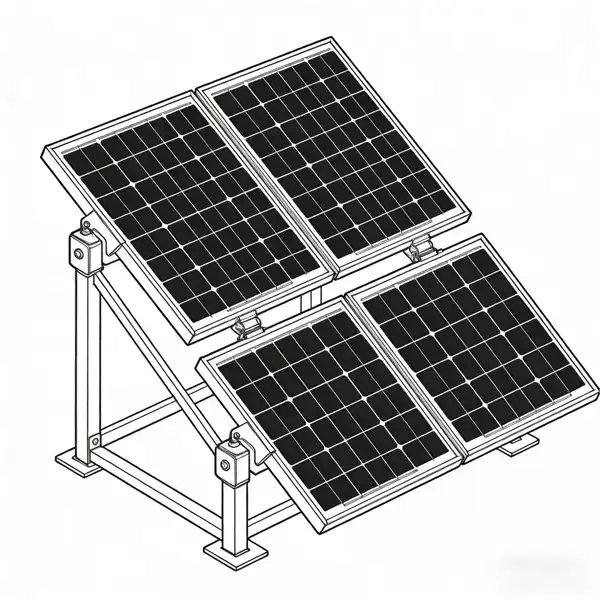
Yes! Our over/under voltage protectors are specifically designed for photovoltaic systems, protecting inverters, solar panels, and energy storage systems from voltage fluctuations and grid instability—critical for ensuring the efficiency and lifespan of solar setups.
Whether you’re an importer looking for high-quality, customizable protection devices, a distributor seeking competitive margins, or an end-user needing reliable voltage protection, our over/under voltage protectors are designed to meet your needs. Contact us today for a free sample, customized quote, or technical support—we’re here to help you protect what matters most.
Contact Us
Share This Article

What is an Over/Under Voltage Protector? Complete Guide & Product Specifications
In an era of growing reliance on electrical equipment—from household appliances to industrial machinery and photovoltaic systems—voltage instability has become a major threat to device safety and lifespan. Power fluctuations, lightning-induced surges, grid switching, and sudden load changes often cause overvoltage or undervoltage, leading to equipment burnout, circuit damage, costly downtime, and even fire hazards. This is where an Over/Under Voltage Protector (OVP/UVP) comes in: a smart electrical safety device designed to monitor, protect, and ensure stable power supply for your valuable equipment. In this guide, we’ll break down what an over/under voltage protector is, how it works, its key product specifications, and why it’s a must-have for homes, businesses, and industrial settings worldwide.
What is an Over/Under Voltage Protector?
An over/under voltage protector is an intelligent electrical protection device that continuously monitors the incoming voltage level of a power circuit. When the voltage exceeds a safe upper limit (overvoltage) or drops below a safe lower limit (undervoltage), the protector automatically disconnects the power supply to prevent damage to connected equipment. Once the voltage returns to the normal, safe range, most models will automatically reconnect the power (auto-reclosing function) after a preset delay—eliminating the need for manual reset and ensuring uninterrupted operation for unattended systems like photovoltaic setups or remote industrial equipment.
Unlike traditional circuit breakers or fuses, which only protect against short circuits and overloads, over/under voltage protectors focus specifically on voltage stability—filling a critical gap in electrical safety. They are widely used in residential, commercial, and industrial applications, including household distribution panels, solar photovoltaic systems, electric vehicle charging stations, office buildings, and unattended server rooms.
How Does an Over/Under Voltage Protector Work?
The core of an over/under voltage protector lies in its built-in voltage detection module and intelligent control system. Here’s a step-by-step breakdown of its working principle:
-
Real-Time Voltage Monitoring: The protector continuously scans the incoming voltage, comparing it to preset safe thresholds (adjustable on most models).
-
Overvoltage Protection: When the voltage exceeds the preset upper limit (e.g., 270-300V AC for residential use), the protector triggers an immediate power cut. Overvoltage is often caused by lightning strikes, grid switching, neutral line faults, or sudden load drops—all of which can burn circuit boards, damage inverters, and destroy electronic components.
-
Undervoltage Protection: When the voltage drops below the preset lower limit (e.g., 140-170V AC for residential use), the protector also cuts off power. Undervoltage typically results from grid overload, long-distance power transmission losses, poor line connections, or temporary blackouts—leading to motor overheating, relay failures, and system instability in appliances like refrigerators, air conditioners, and pumps.
-
Auto-Reclosing & Delay Function: After the voltage returns to the safe range, the protector waits for a preset delay (30-300 seconds, adjustable) to avoid frequent tripping from transient voltage fluctuations. It then automatically reconnects the power—critical for unattended systems like solar energy setups or remote industrial equipment.
-
Overcurrent Protection (Optional): Many advanced models also integrate overcurrent protection, which cuts power if the current exceeds the rated capacity (caused by equipment overload or short circuits). This all-in-one design provides comprehensive protection for sensitive equipment.
Key Product Specifications (2026 Updated)
When choosing an over/under voltage protector for your home, business, or industrial project, understanding the key specifications is essential. Below are the standard and customizable parameters for our high-quality over/under voltage protectors—designed to meet global standards (CE, RoHS) and adapt to diverse market needs:
|
Parameter
|
Standard Specifications
|
Customizable Options
|
|---|---|---|
|
Rated Voltage (AC)
|
220V/230V (Single-Phase); 380V (Three-Phase)
|
110V, 240V, 400V
|
|
Rated Frequency
|
50Hz / 60Hz (Dual Frequency)
|
Customizable for regional power grids
|
|
Rated Current
|
32A, 40A, 63A, 80A, 100A
|
10A-200A (Based on application needs)
|
|
Pole Type
|
1P+N, 2P, 3P+N, 4P
|
Custom pole configurations
|
|
Overvoltage Threshold
|
240V-300V (Adjustable, Default: 275V±5V)
|
220V-330V (Customizable)
|
|
Undervoltage Threshold
|
140V-200V (Adjustable, Default: 170V±5V)
|
120V-220V (Customizable)
|
|
Overcurrent Threshold
|
Adjustable (Based on rated current)
|
Customizable trip current
|
|
Auto-Reclosing Delay
|
30-300 Seconds (Adjustable)
|
1-600 Seconds
|
|
First Power-On Delay
|
30±10 Seconds
|
10-60 Seconds
|
|
Operating Temperature
|
-25℃ to +75℃
|
-40℃ to +85℃ (High-Temperature Resistant Model)
|
|
Mechanical Life
|
≥ 100,000 Operations
|
≥ 150,000 Operations (Premium Model)
|
|
Impulse Withstand Voltage
|
4KV (Meets Class III Electrical Safety Standards)
|
6KV (Lightning Protection Enhanced Model)
|
|
Installation Type
|
35mm DIN Rail Mount (Standard for Electrical Cabinets)
|
Wall-Mounted, Plug-and-Play (Residential Models)
|
|
Certifications
|
CE (LVD-2014/35/EU + EMC-2014/30/EU), RoHS
|
UL, FCC, ISO (Customizable for Target Markets)
|
|
Power Consumption
|
≤ 2W (Energy-Saving Design)
|
≤ 1W (Ultra-Energy-Saving Model)
|
Why Choose Our Over/Under Voltage Protector?
In a competitive market, our over/under voltage protectors stand out for their reliability, versatility, and compliance with global standards. Here’s what makes our products the top choice for importers, distributors, and end-users worldwide:
-
Comprehensive Protection: Integrates overvoltage, undervoltage, and optional overcurrent protection—all in one compact device. Ideal for both residential and industrial applications, including photovoltaic systems, electric vehicle charging stations, and unattended equipment.
-
Intelligent & User-Friendly: Adjustable voltage thresholds and auto-reclosing delay make it easy to adapt to different regional power grids. LED indicators (Green = Normal, Red = Tripped) provide clear status updates, simplifying troubleshooting.
-
Durable & Safe: Flame-retardant housing, high impulse withstand voltage, and long mechanical life ensure stable performance even in harsh environments. Complies with global safety certifications to meet market entry requirements.
-
Cost-Effective & Energy-Saving: Low power consumption (≤2W) reduces long-term energy costs, while the all-in-one design eliminates the need for multiple protection devices. Our factory-direct pricing ensures competitive margins for distributors.
-
Customizable Solutions: We offer customized parameters (voltage, current, pole type) and branding options to meet the specific needs of your target market—whether it’s North America (110V), Europe (230V), or Southeast Asia (220V).
Common Applications
Our over/under voltage protectors are versatile and suitable for a wide range of applications, including:
-
Residential: Household distribution panels, roof solar systems, refrigerators, air conditioners, TVs, and other home appliances.
-
Commercial: Shopping malls, office buildings, hotels, electric vehicle charging stations, and retail stores.
-
Industrial: Factory machinery, photovoltaic inverters, solar energy storage systems, unattended server rooms, and communication equipment.
-
Specialized: Mobile communication towers, street light monitoring systems, and smart city infrastructure.
FAQs About Over/Under Voltage Protectors
Q1: Is an over/under voltage protector the same as a surge protector?
No. An over/under voltage protector handles sustained overvoltage or undervoltage (lasting minutes or hours), while a surge protector blocks instant voltage spikes (lasting microseconds) caused by lightning or grid switching. They are not interchangeable—for full protection, many users combine both devices.
Q2: Can it replace a traditional circuit breaker?
In many applications, yes—especially in systems that require voltage protection (e.g., photovoltaic setups, smart homes). Unlike traditional circuit breakers, our protector offers voltage monitoring and auto-reclosing, making it ideal for unattended environments.
Q3: Do I need to manually reset the protector after a trip?
No—our models feature an auto-reclosing function. Once the voltage returns to normal, the protector will automatically reconnect power after the preset delay. For high-security applications, we also offer manual-reset models (non-auto-reclosing).
Q4: Is it suitable for solar photovoltaic systems?
Yes! Our over/under voltage protectors are specifically designed for photovoltaic systems, protecting inverters, solar panels, and energy storage systems from voltage fluctuations and grid instability—critical for ensuring the efficiency and lifespan of solar setups.
Whether you’re an importer looking for high-quality, customizable protection devices, a distributor seeking competitive margins, or an end-user needing reliable voltage protection, our over/under voltage protectors are designed to meet your needs. Contact us today for a free sample, customized quote, or technical support—we’re here to help you protect what matters most.