

Blog
2026-4-3
What is a time switch?
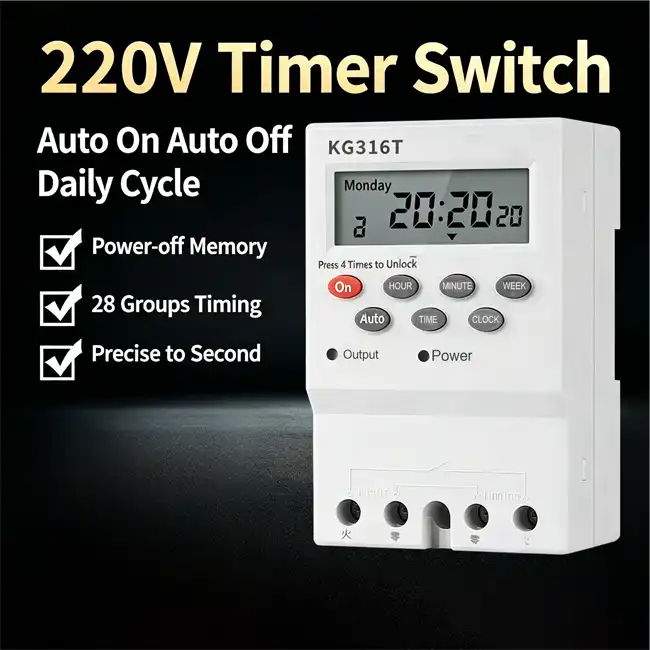
Product Overview: A Precise “Time Butler”
A time switch (also called a microcomputer time switch or programmable timer switch) is an intelligent power switching device based on a single-chip microprocessor and electronic circuitry. It acts like a tireless “time butler,” precisely and automatically turning circuits on and off according to your preset schedule.
Whether you need timed start/stop for home appliances or automated management for commercial and industrial environments, a time switch helps you eliminate manual operations and achieve full automation of electrical equipment.
Five Core Advantages: Why Choose a Time Switch
✅ 1. High Efficiency & Energy Saving – Lower Operating Costs
Prevents equipment (e.g., streetlights, advertising light boxes) from running during unnecessary periods, eliminating wasted lighting and energy. When combined with time-of-use electricity pricing, you can schedule high‑power devices to run during off‑peak night hours, significantly reducing electricity bills.
✅ 2. Power‑Failure Proof – Built‑in Memory
Equipped with a rechargeable or replaceable battery that retains time and settings during a power outage – no frequent recalibration required. For example, the Delixi KG316T features “internal auto‑charging,” truly “not afraid of power outages.”
✅ 3. Direct High‑Power Control – Easy Installation
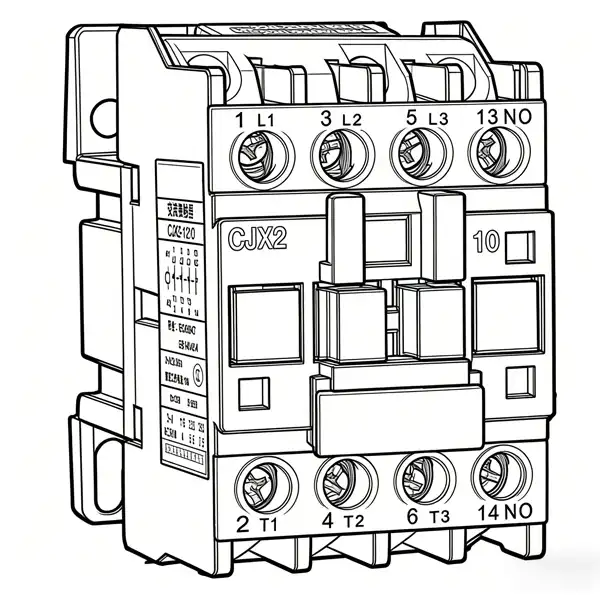
Quality time switches can directly control resistive loads up to 6 kW. For larger industrial loads, simply add an external AC contactor to expand capacity.
✅ 4. Ultra‑High Accuracy – Stable & Reliable
Daily timing error is typically ≤2 seconds, with premium models achieving ≤0.5 seconds/day – ensuring precise, long‑term operation.
✅ 5. Smart IoT – Remote Control Support
Next‑generation models are integrated into smart ecosystems, supporting Bluetooth or Wi‑Fi connectivity. You can change settings or synchronize time remotely via WeChat mini‑program or mobile app, making management even more convenient.
Key Technical Specifications (Reference Standard)
| Core Parameter | Details |
|---|---|
| Operating Voltage | AC 220V 50Hz (some models support AC 110V – 380V wide input) |
| Rated Current | Resistive load: 25A / Inductive load: 10A |
| Programmable Groups | Supports 16 ON / 16 OFF or more settings |
| Timing Range | 1 minute to 168 hours (7‑day cycle) |
| Timing Error | ≤ ±2 seconds/day (≤0.5 seconds for some premium models) |
| Output Configuration | 1 normally open contact (AC contactor required for high power) |
| Electrical / Mechanical Life | Electrical life: 100,000 operations; Mechanical life: 1,000,000 operations |
| Ambient Temperature | -5℃ to +40℃ (special models for extreme low/high temperatures) |
| Power Consumption | Very low, ≤4.5 VA |
Rich Application Scenarios: Full Coverage Automation
| Application Field | Specific Uses | Recommendation |
|---|---|---|
| Municipal & Landscape Lighting | Timed control of streetlights, high‑mast lights, landscape lights, neon signs, advertising light boxes | Digital or astronomical time switch, multi‑channel support |
| Smart Agriculture & Aquaculture | Control automatic irrigation pumps, pond aerators, greenhouse exhaust fans, timed feeding systems | DIN‑rail mounting, waterproof / moisture‑resistant models |
| Industrial Automation | Automatic start/stop of factory machinery, power distribution panels, timed warehouse exhaust & dehumidification | High‑load mechanical or industrial‑grade time switches |
| Commercial & Home Use | Timed water heater heating, automatic yard lighting, shop sign on/off, aquarium light & filter cycles | Smart Wi‑Fi or digital models with remote mobile control |
Selection & Installation Guide
💡 1. Define your needs – Choose the right type
-
Digital – Commercial sites, offices – precise schedule management.
-
Smart Wi‑Fi – Home use – remote control, voice assistant integration.
-
Astronomical – Outdoor streetlights, gardens – automatically matches sunrise/sunset.
-
Mechanical – Factory workshops – industrial‑grade durability and reliability.
💡 2. Verify technical specifications
-
Load matching – Confirm the switch’s rated current is greater than the load’s operating current. If the load exceeds the switch rating, an AC contactor must be added – otherwise the switch contacts will burn out.
-
Voltage compatibility – Check compatibility with your existing circuit voltage (usually AC 220V).
💡 3. Installation & wiring tips
-
Direct control – For small, single‑phase loads within the switch’s rating – wire the switch directly between power supply and load.
-
Expansion (contactor) method – For high‑power devices (large pumps, heaters) – use the time switch to control the contactor coil, and the contactor’s main contacts to handle the load.
-
Safety first – Always turn off the main power before installation, and check that all connections are secure after installation.
Frequently Asked Questions (FAQ)
Q1: Why does my time switch trip or burn out?
A: Usually because the load power is too high for the switch contact rating, causing contact overheating and welding. Solution: add a properly sized AC contactor – the time switch only controls the contactor coil, protecting the switch contacts.
Q2: Will the time switch lose its settings after a power outage?
A: Most quality microcomputer time switches have a built‑in rechargeable or replaceable battery that retains time and program settings during a power outage – no need to reprogram when power returns.
Q3: How do I correct the time on a time switch?
A: Traditional models – use the front‑panel buttons to adjust hour, minute, and day of week. Bluetooth/Wi‑Fi smart models – simply connect to the mobile app and tap “one‑key time sync” – much more convenient.
Q4: Can a time switch be used outdoors or in water?
A: Standard models are not waterproof – they must be used indoors or inside a weatherproof electrical box. For outdoor use, you must choose a water‑resistant / weatherproof model or install a waterproof enclosure.
Q5: How accurate is a time switch?
A: A quality digital time switch typically has a daily timing error of ≤2 seconds – premium models can achieve ≤0.5 seconds/day – far superior to traditional mechanical switches.
Conclusion: Smarter Control with Time Switches
Choosing the right time switch is not only an upgrade to your equipment management – it is a deep optimisation of energy and labour costs. If you need more detailed information on a specific brand/model, or personalised selection advice based on your actual environment, feel free to contact us.
Contact Us
Share This Article
What is a time switch?
Product Overview: A Precise “Time Butler”
A time switch (also called a microcomputer time switch or programmable timer switch) is an intelligent power switching device based on a single-chip microprocessor and electronic circuitry. It acts like a tireless “time butler,” precisely and automatically turning circuits on and off according to your preset schedule.
Whether you need timed start/stop for home appliances or automated management for commercial and industrial environments, a time switch helps you eliminate manual operations and achieve full automation of electrical equipment.
Five Core Advantages: Why Choose a Time Switch
✅ 1. High Efficiency & Energy Saving – Lower Operating Costs
Prevents equipment (e.g., streetlights, advertising light boxes) from running during unnecessary periods, eliminating wasted lighting and energy. When combined with time-of-use electricity pricing, you can schedule high‑power devices to run during off‑peak night hours, significantly reducing electricity bills.
✅ 2. Power‑Failure Proof – Built‑in Memory
Equipped with a rechargeable or replaceable battery that retains time and settings during a power outage – no frequent recalibration required. For example, the Delixi KG316T features “internal auto‑charging,” truly “not afraid of power outages.”
✅ 3. Direct High‑Power Control – Easy Installation
Quality time switches can directly control resistive loads up to 6 kW. For larger industrial loads, simply add an external AC contactor to expand capacity.
✅ 4. Ultra‑High Accuracy – Stable & Reliable
Daily timing error is typically ≤2 seconds, with premium models achieving ≤0.5 seconds/day – ensuring precise, long‑term operation.
✅ 5. Smart IoT – Remote Control Support
Next‑generation models are integrated into smart ecosystems, supporting Bluetooth or Wi‑Fi connectivity. You can change settings or synchronize time remotely via WeChat mini‑program or mobile app, making management even more convenient.
Key Technical Specifications (Reference Standard)
| Core Parameter | Details |
|---|---|
| Operating Voltage | AC 220V 50Hz (some models support AC 110V – 380V wide input) |
| Rated Current | Resistive load: 25A / Inductive load: 10A |
| Programmable Groups | Supports 16 ON / 16 OFF or more settings |
| Timing Range | 1 minute to 168 hours (7‑day cycle) |
| Timing Error | ≤ ±2 seconds/day (≤0.5 seconds for some premium models) |
| Output Configuration | 1 normally open contact (AC contactor required for high power) |
| Electrical / Mechanical Life | Electrical life: 100,000 operations; Mechanical life: 1,000,000 operations |
| Ambient Temperature | -5℃ to +40℃ (special models for extreme low/high temperatures) |
| Power Consumption | Very low, ≤4.5 VA |
Rich Application Scenarios: Full Coverage Automation
| Application Field | Specific Uses | Recommendation |
|---|---|---|
| Municipal & Landscape Lighting | Timed control of streetlights, high‑mast lights, landscape lights, neon signs, advertising light boxes | Digital or astronomical time switch, multi‑channel support |
| Smart Agriculture & Aquaculture | Control automatic irrigation pumps, pond aerators, greenhouse exhaust fans, timed feeding systems | DIN‑rail mounting, waterproof / moisture‑resistant models |
| Industrial Automation | Automatic start/stop of factory machinery, power distribution panels, timed warehouse exhaust & dehumidification | High‑load mechanical or industrial‑grade time switches |
| Commercial & Home Use | Timed water heater heating, automatic yard lighting, shop sign on/off, aquarium light & filter cycles | Smart Wi‑Fi or digital models with remote mobile control |
Selection & Installation Guide
💡 1. Define your needs – Choose the right type
-
Digital – Commercial sites, offices – precise schedule management.
-
Smart Wi‑Fi – Home use – remote control, voice assistant integration.
-
Astronomical – Outdoor streetlights, gardens – automatically matches sunrise/sunset.
-
Mechanical – Factory workshops – industrial‑grade durability and reliability.
💡 2. Verify technical specifications
-
Load matching – Confirm the switch’s rated current is greater than the load’s operating current. If the load exceeds the switch rating, an AC contactor must be added – otherwise the switch contacts will burn out.
-
Voltage compatibility – Check compatibility with your existing circuit voltage (usually AC 220V).
💡 3. Installation & wiring tips
-
Direct control – For small, single‑phase loads within the switch’s rating – wire the switch directly between power supply and load.
-
Expansion (contactor) method – For high‑power devices (large pumps, heaters) – use the time switch to control the contactor coil, and the contactor’s main contacts to handle the load.
-
Safety first – Always turn off the main power before installation, and check that all connections are secure after installation.
Frequently Asked Questions (FAQ)
Q1: Why does my time switch trip or burn out?
A: Usually because the load power is too high for the switch contact rating, causing contact overheating and welding. Solution: add a properly sized AC contactor – the time switch only controls the contactor coil, protecting the switch contacts.
Q2: Will the time switch lose its settings after a power outage?
A: Most quality microcomputer time switches have a built‑in rechargeable or replaceable battery that retains time and program settings during a power outage – no need to reprogram when power returns.
Q3: How do I correct the time on a time switch?
A: Traditional models – use the front‑panel buttons to adjust hour, minute, and day of week. Bluetooth/Wi‑Fi smart models – simply connect to the mobile app and tap “one‑key time sync” – much more convenient.
Q4: Can a time switch be used outdoors or in water?
A: Standard models are not waterproof – they must be used indoors or inside a weatherproof electrical box. For outdoor use, you must choose a water‑resistant / weatherproof model or install a waterproof enclosure.
Q5: How accurate is a time switch?
A: A quality digital time switch typically has a daily timing error of ≤2 seconds – premium models can achieve ≤0.5 seconds/day – far superior to traditional mechanical switches.
Conclusion: Smarter Control with Time Switches
Choosing the right time switch is not only an upgrade to your equipment management – it is a deep optimisation of energy and labour costs. If you need more detailed information on a specific brand/model, or personalised selection advice based on your actual environment, feel free to contact us.