

Blog
2026-2-27
What is a Molded Case Circuit Breaker (MCCB)?
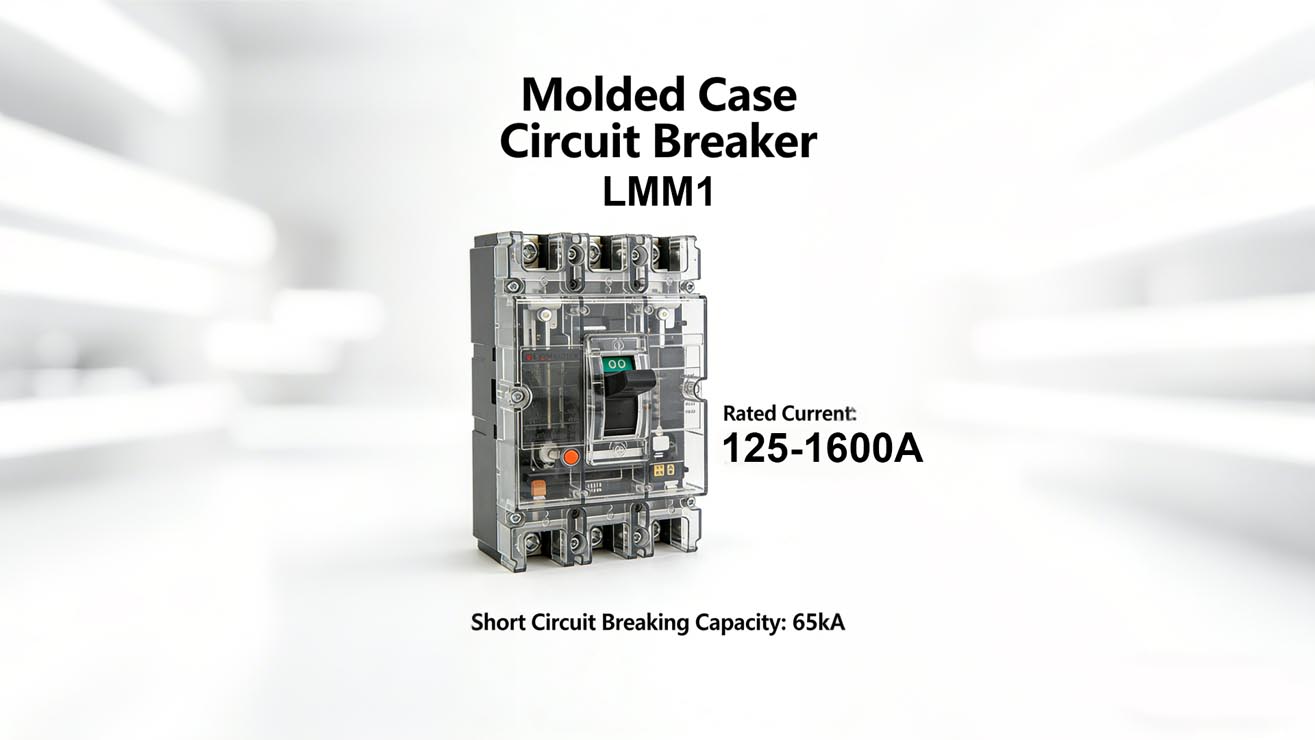
1. What is a Molded Case Circuit Breaker (MCCB)?
- Manually ON/OFF power circuits
- Automatic tripping for overload (long-delay protection)
- Instant tripping for short circuit (ultra-fast protection)
- Optional auxiliary protections for complex power systems
2. Key Structure & Working Principle
- Molded Plastic Case
Flame-retardant, shock-resistant, and insulated; prevents electric shock and dust ingress (IP30–IP54 protection).
- Contact System
High-precision silver alloy contacts for stable conductivity and long service life.
- Arc Extinguishing Chamber
Quickly cuts and extinguishes high-temperature arcs caused by short circuits (millisecond-level response).
- Operating Mechanism
Spring-stored energy structure for fast, reliable switching.
- Trip Unit (The “Brain” of MCCB)
- Thermal-Magnetic Trip: Standard version; thermal protection for overload, magnetic protection for short circuits.
- Electronic Trip: High-precision adjustable version, supports 3-stage protection for heavy-duty equipment.
Working Logic:
Under normal current → stable operation.
Overcurrent/overload → thermal element triggers delayed tripping.
Short circuit → magnetic element triggers instant tripping to cut off power.
3. Core Advantages of MCCBs
Why are MCCBs the first choice for global power projects?
✅ High Safety: Fully insulated plastic housing, anti-shock, anti-arc, fire-resistant.
✅ Wide Current Range: Rated current 16A–1600A (covers most industrial & commercial loads).
✅ Strong Breaking Capacity: Handles high short-circuit currents (critical for factory/grid systems).
✅ Reusable & Maintenance-Friendly: Resets after fault removal (no need to replace fuses).
✅ Modular Design: Compatible with auxiliary contacts, shunt trip, undervoltage release, and remote control.
✅ Global Compatibility: Suitable for 400V/690V low-voltage systems worldwide.
4. Typical Applications of MCCBs
- Industrial Facilities: Factory power boxes, motor circuits, pumps, fans, assembly lines
- Commercial Buildings: Shopping malls, offices, hotels, elevators, central air conditioning
- Civil Engineering: Residential power distribution main switches, high-power electrical circuits
- Infrastructure: Power stations, data centers, telecommunications base stations
- Special Equipment: Marine, mining, and industrial control panels (custom models available)
5. MCCB vs MCB vs ACB: Clear Comparison
| Type | Full Name | Rated Current | Application |
|---|---|---|---|
| MCB | Miniature Circuit Breaker | 6A–63A | Household, small lighting circuits |
| MCCB | Molded Case Circuit Breaker | 16A–1600A | Industrial/commercial branch circuits, main loops |
| ACB | Air Circuit Breaker | 630A–6300A | Large power distribution cabinet MAIN switches |
- MCB = Home use
- MCCB = Industrial & commercial core protection
- ACB = High-power main incoming supply
6. How to Select the Right MCCB (For Global Buyers)
- Rated Current (In)
Match the load current (common models: 100A, 250A, 400A, 630A).
- Rated Voltage
Standard 400V/690V for global low-voltage systems.
- Breaking Capacity
Higher = safer for grids with large short-circuit current.
- Trip Type
Thermal-magnetic for general use; electronic for precision equipment.
7. Why Our MCCBs Are Ideal for Your International Market
As a professional supplier for global distributors and contractors, our MCCBs feature:
✔ Compliance with IEC, CE, CB international standards
✔ Stable quality for harsh working environments
✔ Competitive wholesale pricing & full inventory
✔ Customizable for regional power systems
✔ Full technical support for installation & selection
Share This Article

What is a Molded Case Circuit Breaker (MCCB)?
1. What is a Molded Case Circuit Breaker (MCCB)?
- Manually ON/OFF power circuits
- Automatic tripping for overload (long-delay protection)
- Instant tripping for short circuit (ultra-fast protection)
- Optional auxiliary protections for complex power systems
2. Key Structure & Working Principle
- Molded Plastic Case
Flame-retardant, shock-resistant, and insulated; prevents electric shock and dust ingress (IP30–IP54 protection).
- Contact System
High-precision silver alloy contacts for stable conductivity and long service life.
- Arc Extinguishing Chamber
Quickly cuts and extinguishes high-temperature arcs caused by short circuits (millisecond-level response).
- Operating Mechanism
Spring-stored energy structure for fast, reliable switching.
- Trip Unit (The “Brain” of MCCB)
- Thermal-Magnetic Trip: Standard version; thermal protection for overload, magnetic protection for short circuits.
- Electronic Trip: High-precision adjustable version, supports 3-stage protection for heavy-duty equipment.
Working Logic:
Under normal current → stable operation.
Overcurrent/overload → thermal element triggers delayed tripping.
Short circuit → magnetic element triggers instant tripping to cut off power.
3. Core Advantages of MCCBs
Why are MCCBs the first choice for global power projects?
✅ High Safety: Fully insulated plastic housing, anti-shock, anti-arc, fire-resistant.
✅ Wide Current Range: Rated current 16A–1600A (covers most industrial & commercial loads).
✅ Strong Breaking Capacity: Handles high short-circuit currents (critical for factory/grid systems).
✅ Reusable & Maintenance-Friendly: Resets after fault removal (no need to replace fuses).
✅ Modular Design: Compatible with auxiliary contacts, shunt trip, undervoltage release, and remote control.
✅ Global Compatibility: Suitable for 400V/690V low-voltage systems worldwide.
4. Typical Applications of MCCBs
- Industrial Facilities: Factory power boxes, motor circuits, pumps, fans, assembly lines
- Commercial Buildings: Shopping malls, offices, hotels, elevators, central air conditioning
- Civil Engineering: Residential power distribution main switches, high-power electrical circuits
- Infrastructure: Power stations, data centers, telecommunications base stations
- Special Equipment: Marine, mining, and industrial control panels (custom models available)
5. MCCB vs MCB vs ACB: Clear Comparison
| Type | Full Name | Rated Current | Application |
|---|---|---|---|
| MCB | Miniature Circuit Breaker | 6A–63A | Household, small lighting circuits |
| MCCB | Molded Case Circuit Breaker | 16A–1600A | Industrial/commercial branch circuits, main loops |
| ACB | Air Circuit Breaker | 630A–6300A | Large power distribution cabinet MAIN switches |
- MCB = Home use
- MCCB = Industrial & commercial core protection
- ACB = High-power main incoming supply
6. How to Select the Right MCCB (For Global Buyers)
- Rated Current (In)
Match the load current (common models: 100A, 250A, 400A, 630A).
- Rated Voltage
Standard 400V/690V for global low-voltage systems.
- Breaking Capacity
Higher = safer for grids with large short-circuit current.
- Trip Type
Thermal-magnetic for general use; electronic for precision equipment.
7. Why Our MCCBs Are Ideal for Your International Market
As a professional supplier for global distributors and contractors, our MCCBs feature:
✔ Compliance with IEC, CE, CB international standards
✔ Stable quality for harsh working environments
✔ Competitive wholesale pricing & full inventory
✔ Customizable for regional power systems
✔ Full technical support for installation & selection