
Blog
2026-2-6
What is a molded case circuit breaker?
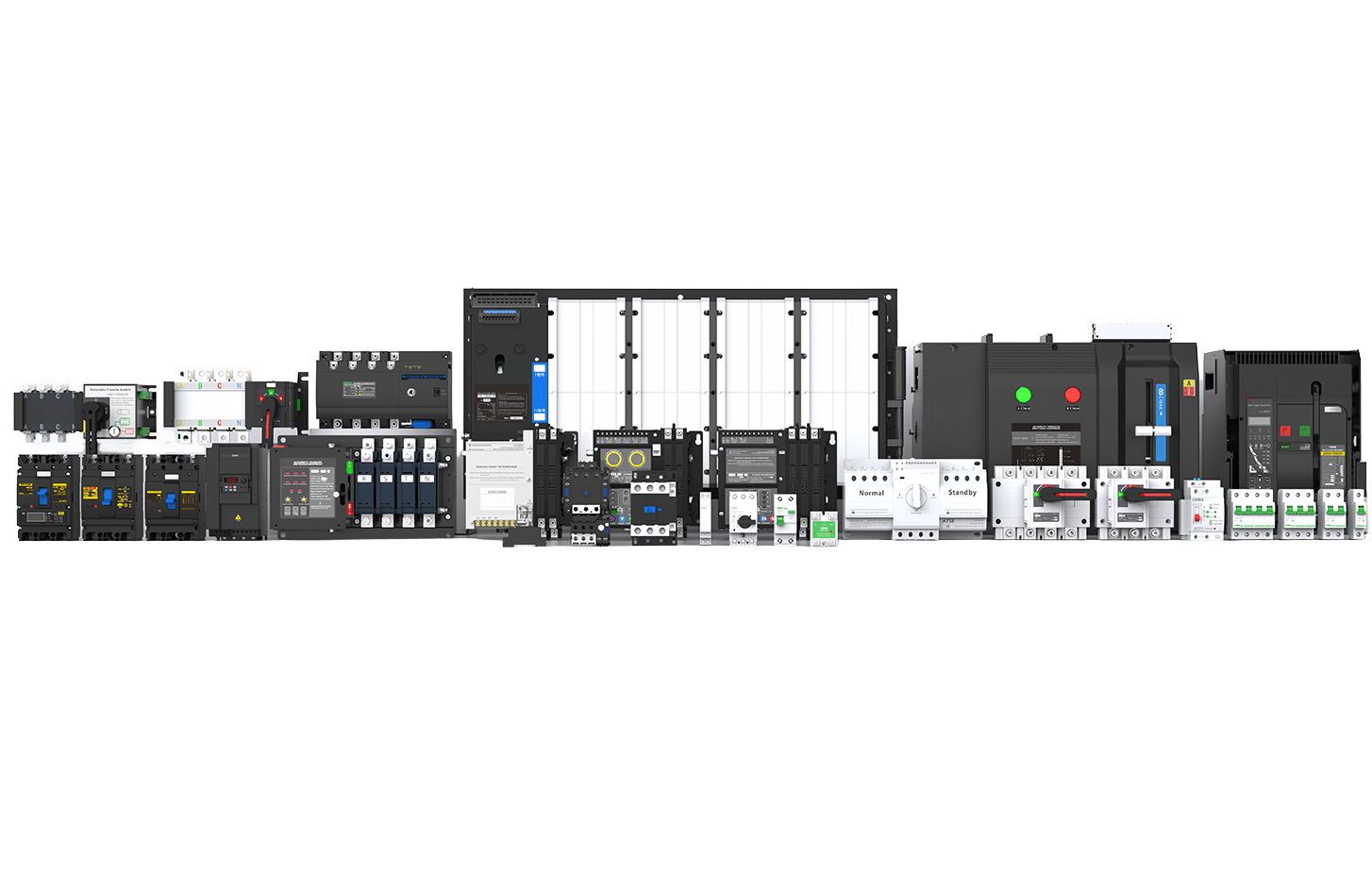
Molded Case Circuit Breaker (MCCB) is one of the core protective appliances in low-voltage power distribution systems. It is named because the main circuit contacts and arc extinguishing system are encapsulated in a molded plastic shell. It has core functions of overload protection and short-circuit protection. Some models can be extended with leakage, undervoltage, overvoltage and other protections. It is widely used in power supply protection and on-off control of distribution lines, motors, transformers and other equipment.
Its shell is integrally molded from flame-retardant, insulating, high-strength engineering plastics (such as DMC, SMC), which can effectively isolate arcs, prevent electric shock and the influence of external dust/moisture. It has a compact structure and high protection level. It is suitable for low-voltage (AC 50/60Hz, generally to 1000V, mainstream 380V/400V) power distribution scenarios in industry, commerce, and construction. The rated current covers 10A~1600A (conventional mainstream 63A, 100A, 250A, 400A, 630A), is a key power distribution device between the miniature circuit breaker (MCB, small current terminal protection) and the frame circuit breaker (ACB, large current general distribution protection).
Core structure
The molded case circuit breaker has an integrated sealed structure, and the core components are integrated in the plastic case, making it difficult to disassemble (some models support on-site replacement of accessories). It mainly consists of:
Contact system: moving contacts and static contacts to realize circuit on and off, equipped with silver-based alloy contacts to improve arc resistance and welding resistance;
Arc extinguishing system: arc extinguishing chamber and arc extinguishing grid quickly extinguish the high-temperature arc generated during short circuit and prevent arc leakage;
Operating mechanism: manual (handle)/electric operation, with quick-on and quick-off characteristics to ensure that the circuit is quickly cut off in case of failure;
Protection tripper: core control component, divided into two basic types, which can be used in combination:
Thermal magnetic tripper: The thermal element (bimetallic sheet) responds to overload (the bimetallic sheet is heated and bent to trigger tripping during overload), and the electromagnetic component (electromagnetic coil) responds to short circuit (short circuit and large current generates strong magnetic force to instantly attract and trip). It is cost-effective and is a mainstream model;
Electronic tripper: detects current through electronic circuits, has higher protection accuracy, adjustable setting value, and is suitable for industrial scenarios with high protection requirements;
Shell and terminals: Molded plastic shell + copper terminals to ensure insulation and conductive performance. The terminals are divided into front, rear and plug-in types to adapt to different installation needs.
Core features
Protection functions: The basics are overload long-time delay protection and short-circuit instantaneous protection. Some models can choose short-circuit short-time delay protection (selective protection to avoid over-level tripping), leakage protection (RCCB combination), and undervoltage/overvoltage tripping;
Operation mode: manual operation (front handle, clear indication of opening and closing), electric operation (adapted to remote control), energy storage operation (high current model, opening and closing is more reliable);
Installation method: fixed type (mainstream), plug-in type (easy to repair and replace), drawer type (high-end, flexible switching in the power distribution cabinet);
Breaking capacity: key parameters, including limit breaking capacity Icu (one-time breaking of fault current and cannot be reused) and operating breaking capacity Ics (can continue to be used after breaking, generally 50%~100% of Icu), which need to be selected according to the short-circuit current of the distribution system;
Selectivity: realized through short-delay tripping, upper and lower circuit breakers cooperate, and only the circuit breaker at the fault point trips, ensuring normal power supply for other lines and improving the reliability of the power distribution system.
Typical application scenarios
Industrial plants: distribution branch line protection, power supply protection and control of water pumps/fans/motors and other power equipment;
Commercial buildings: Power supply protection for power distribution boxes, air conditioners/firefighting equipment on distribution floors in office buildings and shopping malls;
Power distribution system: branch line shunts in low-voltage distribution cabinets, and secondary side outlet protection of transformers;
New energy field: low-voltage power distribution protection for photovoltaic inverters and energy storage cabinets (adapted to DC plastic case circuit breakers, DC MCCB);
Civil buildings: Main distribution boxes and fire distribution circuit protection of large communities and hotels.
Key selection points
Determine the rated operating voltage Ue (matching the system voltage, such as 380V/400V), and the rated current In (1.2~1.5 times greater than the load calculation current);
Calculate the system short-circuit current and select a model with a breaking capacity (Icu/Ics) greater than the system short-circuit current;
Select the tripper type (thermal magnetic/electronic) and protection function (whether short delay, leakage is required) according to the protection requirements;
Consider the installation method (fixed/plug-in), operation method (manual/electric);
Selective coordination of upper and lower level circuit breakers to avoid overlevel tripping (focus on short-delay setting values);
Special scenario: DC circuit (photovoltaic/energy storage) needs to choose DC molded case circuit breaker, pay attention to DC breaking characteristics and polarity.