

Blog
2025-10-9
Reliable Power Starts Here: Your ATS Selection Guide

Choosing the appropriate Automatic Transfer Switch (ATS) is essential for maintaining uninterrupted power supply and protecting critical equipment. Whether for industrial, commercial, or residential use, the right Power Ats ensures seamless transition between primary and backup sources. This guide provides a structured checklist to help you evaluate key features, compare types such as switch ATS models, and make a confident selection based on safety, performance, and compliance.
1.Core Parameters to Consider
When selecting an Automatic Transfer Switch (ATS), start by identifying the core electrical and operational parameters required for your application. Key electrical parameters include system voltage, current rating, frequency, and number of phases. Equally critical are operational parameters, such as desired transfer time, type of loads supported, and specific control or monitoring features needed. This step ensures the chosen ATS possesses necessary capabilities and compatibility.
- Switching Speed Requirements
For settings like data centers or medical facilities, ensure the switch ATS offers millisecond-level switching speed. - Rated Current and Load Matching
The rated current must align with the total load to avoid overloading.
- Number of Poles and System Compatibility
The number of poles should match the electrical system configuration. - Mechanical Lifespan
Frequent switching demands a high mechanical lifespan to guarantee long-term reliability.
2.Types of ATS: Electromechanical vs. Electric
ATS systems fall into two main categories: electromechanical and electric.
- Electromechanical ATS
Electromechanical power ATS devices provide extremely fast switching, ideal for environments such as operating rooms and server farms. - Electric ATS
Electric ATS switches deliver consistent performance and suit industrial applications with regular power transitions. - Integrated vs Modular Designs
Integrated ATS models are common in residential buildings thanks to their simple installation, while modular versions offer better maintenance access and scalability for industrial use.
3.Safety and Protection Features
Safety is the foremost concern when choosing an ATS.
- Essential Protection Functions
Ensure the device includes overload, short-circuit, and under-voltage protection. - Fire Alarm Interlocking
Crucial for automatically cutting non-essential power during a fire emergency. - Ingress Protection (IP) Ratings
Choose IP65 or higher for dusty or humid conditions. - Remote Monitoring Capabilities
High-end power ATS units may offer remote monitoring, reducing manual oversight and operational cost.
4.Brand and Certification Considerations
Opting for a reputable brand often brings greater reliability.
- Brand Selection and Value
LVMA products offer excellent value for money and are well-suited for household use. - Certification Requirements
Always verify that the switch ATS carries relevant certifications such as CCC or CE. - After-Sales Support and Maintenance
Consider long-term maintenance and after-sales support to avoid future operational disruptions.
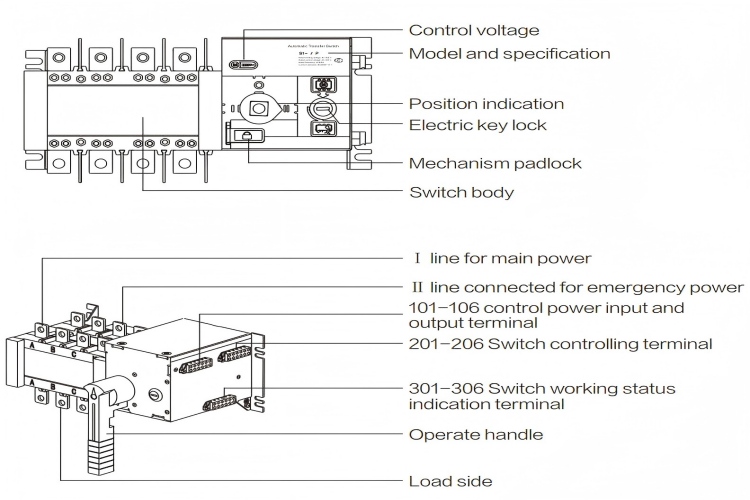
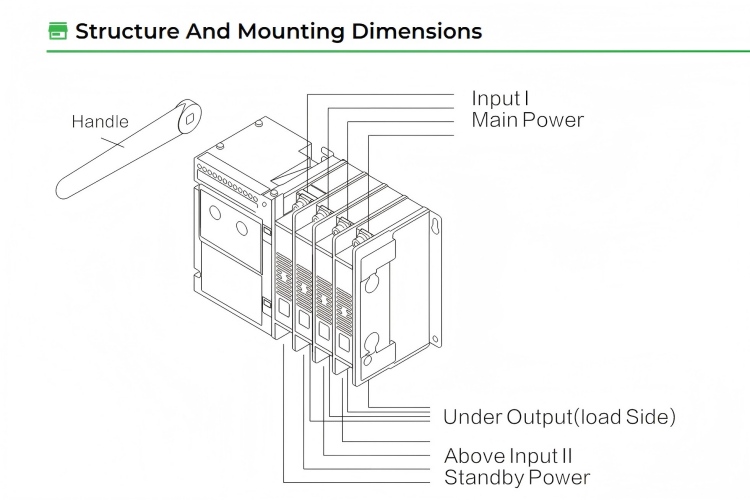
5.Product Highlight: LMS1-SA Series
The LMS1-SA series is a high-tech power ATS developed in compliance with industry standards.
- Compliance and Testing
Each unit undergoes stringent aging tests and a 24-hour high-temperature burn-in followed by load testing. - Voltage and Frequency Specifications
Designed for AC 400V/50Hz systems. - Load Transfer and Manual Control
Quickly transfers loads from faulty mains to backup power and allows manual intermediate positioning. - Typical Applications
Widely used in fire protection, hospitals, telecommunications, and high-rise buildings.
6.Conclusion
Selecting the right Automatic Transfer Switch involves careful evaluation of technical parameters, safety features, types, and certifications. A well-chosen power ATS enhances system resilience, prevents equipment damage, and ensures compliance with industry standards. Whether you prioritize speed, safety, or value, using a structured approach—like the checklist above—will help you make an informed decision. For more details on the LMS1-SA series or other switch ATS solutions, feel free to contact our sales team.
Contact Us
Share This Article
Reliable Power Starts Here: Your ATS Selection Guide
Choosing the appropriate Automatic Transfer Switch (ATS) is essential for maintaining uninterrupted power supply and protecting critical equipment. Whether for industrial, commercial, or residential use, the right Power Ats ensures seamless transition between primary and backup sources. This guide provides a structured checklist to help you evaluate key features, compare types such as switch ATS models, and make a confident selection based on safety, performance, and compliance.
1.Core Parameters to Consider
When selecting an Automatic Transfer Switch (ATS), start by identifying the core electrical and operational parameters required for your application. Key electrical parameters include system voltage, current rating, frequency, and number of phases. Equally critical are operational parameters, such as desired transfer time, type of loads supported, and specific control or monitoring features needed. This step ensures the chosen ATS possesses necessary capabilities and compatibility.
- Switching Speed Requirements
For settings like data centers or medical facilities, ensure the switch ATS offers millisecond-level switching speed. - Rated Current and Load Matching
The rated current must align with the total load to avoid overloading.
- Number of Poles and System Compatibility
The number of poles should match the electrical system configuration. - Mechanical Lifespan
Frequent switching demands a high mechanical lifespan to guarantee long-term reliability.
2.Types of ATS: Electromechanical vs. Electric
ATS systems fall into two main categories: electromechanical and electric.
- Electromechanical ATS
Electromechanical power ATS devices provide extremely fast switching, ideal for environments such as operating rooms and server farms. - Electric ATS
Electric ATS switches deliver consistent performance and suit industrial applications with regular power transitions. - Integrated vs Modular Designs
Integrated ATS models are common in residential buildings thanks to their simple installation, while modular versions offer better maintenance access and scalability for industrial use.
3.Safety and Protection Features
Safety is the foremost concern when choosing an ATS.
- Essential Protection Functions
Ensure the device includes overload, short-circuit, and under-voltage protection. - Fire Alarm Interlocking
Crucial for automatically cutting non-essential power during a fire emergency. - Ingress Protection (IP) Ratings
Choose IP65 or higher for dusty or humid conditions. - Remote Monitoring Capabilities
High-end power ATS units may offer remote monitoring, reducing manual oversight and operational cost.
4.Brand and Certification Considerations
Opting for a reputable brand often brings greater reliability.
- Brand Selection and Value
LVMA products offer excellent value for money and are well-suited for household use. - Certification Requirements
Always verify that the switch ATS carries relevant certifications such as CCC or CE. - After-Sales Support and Maintenance
Consider long-term maintenance and after-sales support to avoid future operational disruptions.
5.Product Highlight: LMS1-SA Series
The LMS1-SA series is a high-tech power ATS developed in compliance with industry standards.
- Compliance and Testing
Each unit undergoes stringent aging tests and a 24-hour high-temperature burn-in followed by load testing. - Voltage and Frequency Specifications
Designed for AC 400V/50Hz systems. - Load Transfer and Manual Control
Quickly transfers loads from faulty mains to backup power and allows manual intermediate positioning. - Typical Applications
Widely used in fire protection, hospitals, telecommunications, and high-rise buildings.
6.Conclusion
Selecting the right Automatic Transfer Switch involves careful evaluation of technical parameters, safety features, types, and certifications. A well-chosen power ATS enhances system resilience, prevents equipment damage, and ensures compliance with industry standards. Whether you prioritize speed, safety, or value, using a structured approach—like the checklist above—will help you make an informed decision. For more details on the LMS1-SA series or other switch ATS solutions, feel free to contact our sales team.