

Blog
2025-10-9
Miniature Circuit Breakers: Low-Voltage Power Distribution Systems

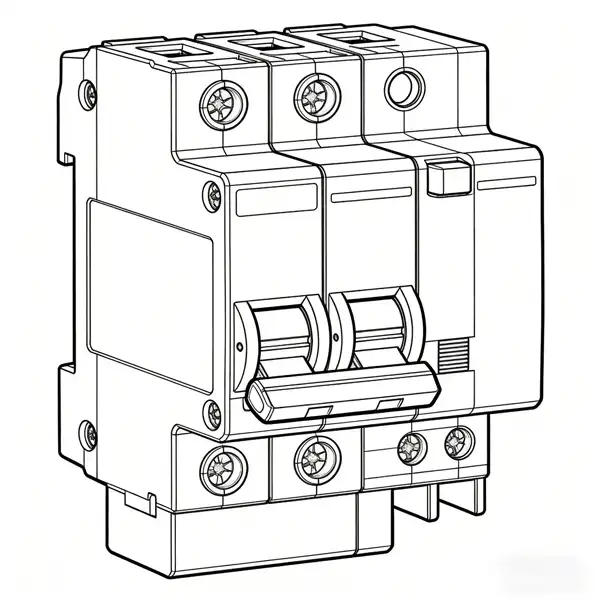
In modern building electrical systems, industrial control systems, and household power distribution systems, miniature circuit breakers (MCBs) are core components that ensure safe circuit operation. As low-voltage electrical devices that provide both overload and short-circuit protection, they quickly cut off power when circuit anomalies occur, preventing equipment damage and even fire. This article will systematically analyze the operating principles, core parameters, technological innovations, and selection and application of miniature circuit breakers from a technical perspective, providing a comprehensive technical reference for electrical engineers, construction workers, and ordinary users.
I. Definition and Core Functions of Miniature Circuit Breakers
Miniature circuit breakers are protective devices used in low-voltage power distribution systems operating at 50/60 Hz AC, with a rated voltage not exceeding 400V and a rated current not exceeding 125A. Their core functions revolve around fault identification and rapid disconnection, and they can be categorized into three main types:
1. Overload Protection
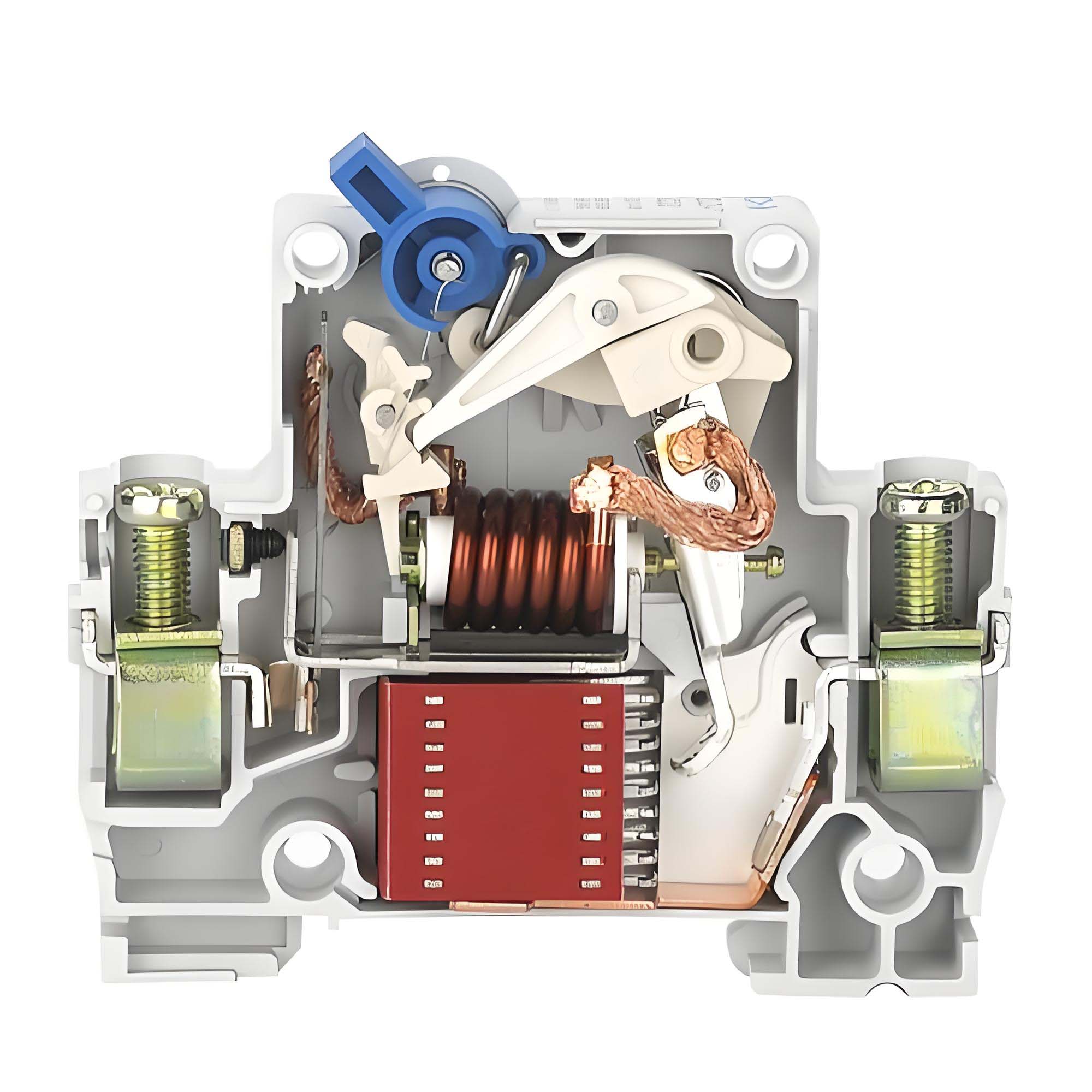
When the actual current in a circuit continuously exceeds the rated current (for example, when high-power appliances like air conditioners, electric water heaters, and ovens are simultaneously running in a home), the conductor heats up, causing the bimetallic strip inside the circuit breaker to bend. This bending triggers the mechanical trip mechanism, separating the moving and stationary contacts, thus interrupting the circuit. The overload protection’s operating time exhibits an inverse time characteristic—the greater the overload current, the shorter the operating time. (For example, a 10A circuit breaker might delay operating for several minutes at 1.2 times the rated current, but will trip in just 0.1 seconds at 6 times the rated current.) This prevents unnecessary tripping caused by short-term minor overloads while enabling rapid response to severe overloads.
2. Short-Circuit Protection
When a short circuit occurs (e.g., direct contact between the live and neutral wires, or insulation damage leading to overlapping conductors), a “short-circuit current” tens or even hundreds of times the rated current is instantly generated. At this point, the circuit breaker’s internal electromagnetic release comes into play: the short-circuit current flowing through the coil generates a strong magnetic field, attracting the armature to rapidly strike the trip mechanism, causing the contacts to open within 0.01-0.02 seconds. This minimizes the impact of the short-circuit current on conductors and equipment, while also preventing safety hazards caused by arcing.
3. Auxiliary Functions
With technological advancements, modern miniature circuit breakers have integrated functions such as leakage protection (in conjunction with leakage protection accessories), overvoltage protection, and remote control. For example, an MCB with leakage protection can quickly trip in the event of electric shock or circuit leakage (residual current exceeding 30mA), ensuring personal safety. Intelligent MCBs, on the other hand, can enable remote status monitoring and trip history querying through IoT modules, making them suitable for smart homes and industrial automation scenarios.
II. Core Technical Parameters and Selection Criteria for Miniature Circuit Breakers
The proper selection directly impacts the circuit breaker’s protective effectiveness and service life. The following core technical parameters should be considered:
1. Rated Current (In)
This refers to the maximum current a circuit breaker can withstand stable, long-term operation and is also the baseline value for overload protection. Selection should be based on the circuit’s “calculated load current.” For example, if the calculated current for a home lighting circuit is approximately 2-3A, a circuit breaker with an In = 10A should be selected. If the calculated current for a kitchen outlet circuit (including electric ovens and microwave ovens) is approximately 8-12A, a circuit breaker with an In = 16A or 20A should be selected. Important: The circuit breaker’s rated current should be slightly greater than the calculated load current (typically allowing a 10%-20% margin) to avoid overheating caused by prolonged full-load operation.
2. Rated Short-Circuit Breaking Capacity (Icn)
This refers to the maximum short-circuit current a circuit breaker can safely interrupt at rated voltage. It is a key indicator of a circuit breaker’s surge protection capability. Different scenarios have different Icn requirements. In household power distribution systems, due to the small capacity of the distribution transformer (usually 50-200kVA), the short-circuit current generally does not exceed 10kA, so a circuit breaker with an Icn of 6kA or 10kA is sufficient. However, in industrial workshops and commercial buildings, due to the large capacity of the transformer (over 500kVA), the short-circuit current may reach over 20kA, requiring a high-breaking capacity circuit breaker with an Icn of 16kA or 25kA. Otherwise, a short circuit may cause faults such as “contact welding” and “shell explosion.” 3. Tripping Characteristics Curve
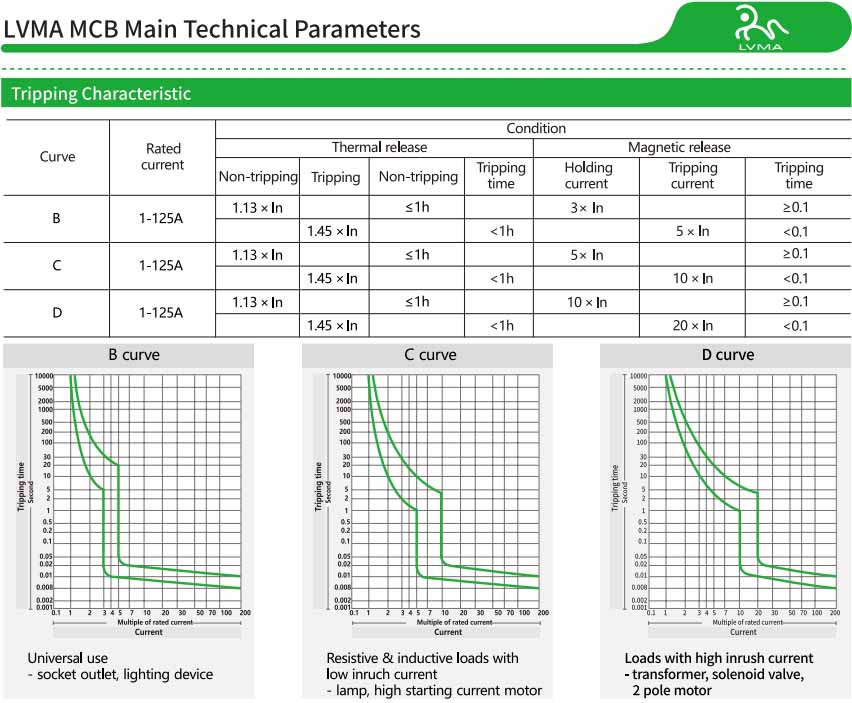
Based on the relationship between overload current and operating time, the tripping characteristics of miniature circuit breakers are categorized into five types: A, B, C, D, and K. The type should be selected based on the load type:
Type A: Trips at 2-3 in., suitable for semiconductor loads (such as inverters and rectifiers), preventing tripping due to minor overloads;
Type B: Trips at 3-5 in., suitable for purely resistive loads (such as incandescent lamps and electric heaters);
Type C: Trips at 5-10 in., suitable for standard inductive loads (such as motors, air conditioners, and refrigerators), and is the mainstream choice for homes and commercial buildings;
Type D: Trips at 10-20 in., suitable for loads with high starting currents (such as high-power motors and compressors), preventing false tripping due to inrush currents during startup;
Type K: Trips at 8-14 in., suitable for loads such as transformers and fluorescent lamps, balancing starting current and overload protection.
4. Rated Voltage (Un)
This must match the rated voltage of the power distribution system. Common specifications include 230V (single-phase) and 400V (three-phase). For example, a household single-phase power distribution system should use a circuit breaker with Un = 230V, while an industrial three-phase power distribution system should use a circuit breaker with Un = 400V to avoid insulation damage caused by voltage mismatch.
III. Key Technological Innovations and Development Trends in Miniature Circuit Breakers
In recent years, as low-voltage power distribution systems have evolved toward safety, intelligence, and energy efficiency, miniature circuit breakers have seen numerous technological innovations in materials, structure, and functionality:
1. Material Innovation: Improving High-Temperature Resistance and Insulation Performance
Traditional circuit breaker casings are mostly made of phenolic resin, which has poor high-temperature resistance (long-term operating temperatures do not exceed 80°C). Current mainstream products use tracking-resistant resins (such as PA66+GF30), which can withstand long-term operating temperatures exceeding 120°C and offer excellent insulation properties, effectively preventing casing deformation and leakage risks caused by high temperatures. Furthermore, the contact material has been upgraded from pure copper to silver alloys (such as AgCdO and AgSnO₂), reducing contact resistance and heat generation while also improving resistance to arc erosion, extending the circuit breaker’s lifespan from thousands to tens of thousands of cycles.
2. Structural Optimization: Improved Interrupting Efficiency and Reliability
Dual-break contact structure: Traditional circuit breakers use single-break contacts, resulting in long arc lengths and high energy during interruption. Dual-break contacts simultaneously interrupt the arc by splitting it into two sections, accelerating arc extinguishing and reducing interruption time to less than 0.01 seconds, making them suitable for high short-circuit current scenarios.
Modular design: The circuit breaker body, residual current accessories, overvoltage accessories, and communication modules are designed as independent modules. Users can flexibly combine them according to their needs without having to replace the entire circuit breaker, reducing maintenance costs. For example, a standard MCB can be upgraded to a residual current circuit breaker by adding a residual current module, meeting the safety requirements of humid environments such as bathrooms and kitchens.
3. Intelligent Upgrade: Adapting to the Needs of Smart Power Distribution
Intelligent miniature circuit breakers are a core development direction, primarily embodied in the following aspects:
Condition Monitoring: Built-in current, voltage, and temperature sensors collect circuit parameters in real time and upload them to a cloud platform via RS485, LoRa, or Wi-Fi modules. Users can view operating status via a mobile app, providing early warning of potential hazards such as overload and overheating.
Remote Control: Supports remote closing/opening, making it suitable for unmanned scenarios (such as data centers and smart buildings). When circuit anomalies occur, power can be remotely disconnected, reducing troubleshooting time.
Fault Diagnosis: Trip cause recording (such as overload, short circuit, and leakage) facilitates quick fault location and improves maintenance efficiency.
IV. Key Points for Miniature Circuit Breaker Installation and Maintenance
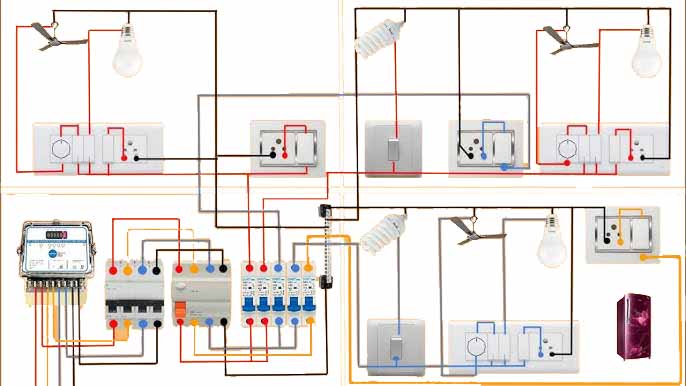
Proper installation and maintenance are crucial to ensuring circuit breaker performance. The following specifications must be adhered to:
1. Installation Specifications
Wiring Requirements: Strictly distinguish the incoming (L, N) and outgoing terminals to avoid reversed connections. The wire cross-sectional area should match the rated current of the circuit breaker (e.g., for a 16A circuit breaker, use copper conductors with a cross-sectional area ≥ 1.5mm²). Terminal screws must be tightened during wiring to prevent poor contact and overheating.
Installation Environment: Avoid installation in humid, dusty, or high-temperature environments (over 40°C). If installed in a distribution box, ensure adequate ventilation to prevent excessive temperatures from affecting tripping accuracy.
Polarity and Phase: For three-phase circuit breakers, pay attention to the phase sequence to avoid equipment failure due to incorrect phases. For circuit breakers with leakage protection, ensure the neutral wire (N) is connected correctly, otherwise the leakage protection function will be ineffective.
2. Maintenance Key Points
Regular Inspection.: Quarterly, inspect the circuit breaker for signs of burns or deformation. When manually operating the opening and closing buttons, check the mechanism for flexibility to prevent tripping due to jamming.
Cleaning and Maintenance: Annually, clean the distribution box to prevent dust accumulation that could degrade insulation performance. Check the terminals for loose connections. If any discoloration (such as blackening or oxidation) is observed due to overheating, tighten or replace them promptly.
Lifespan Management: Miniature circuit breakers typically have an electrical life of 10,000 opening and closing cycles and a mechanical life of 20,000 cycles. When the circuit breaker exceeds 10 years (or reaches its service life), performance testing (such as switching capacity and tripping characteristics) is required. If performance does not meet standards, replace the circuit breaker promptly to prevent protection failure due to aging.
V. Conclusion
As the “first line of defense” in low-voltage power distribution systems, the technical performance of miniature circuit breakers is directly related to power safety and system reliability. From traditional mechanical protection to modern intelligent monitoring, innovations in materials, structure, and functionality of miniature circuit breakers have not only improved protection accuracy and response speed, but also provided technical support for smart power distribution and energy management.
In the future, with the increasing popularity of new energy sources (such as photovoltaics and energy storage), miniature circuit breakers will also develop towards DC compatibility and bidirectional protection. For example, DC miniature circuit breakers for DC distribution systems will need to address the difficulty of extinguishing DC arcs; circuit breakers for photovoltaic grid-connected systems will need to include backflow protection. Users should consider the load type and scenario requirements when selecting a miniature circuit breaker, and pay attention to installation specifications and regular maintenance to fully utilize the safety protection capabilities of miniature circuit breakers and ensure safe power use.
Contact Us
Share This Article
Miniature Circuit Breakers: Low-Voltage Power Distribution Systems
In modern building electrical systems, industrial control systems, and household power distribution systems, miniature circuit breakers (MCBs) are core components that ensure safe circuit operation. As low-voltage electrical devices that provide both overload and short-circuit protection, they quickly cut off power when circuit anomalies occur, preventing equipment damage and even fire. This article will systematically analyze the operating principles, core parameters, technological innovations, and selection and application of miniature circuit breakers from a technical perspective, providing a comprehensive technical reference for electrical engineers, construction workers, and ordinary users.
I. Definition and Core Functions of Miniature Circuit Breakers
Miniature circuit breakers are protective devices used in low-voltage power distribution systems operating at 50/60 Hz AC, with a rated voltage not exceeding 400V and a rated current not exceeding 125A. Their core functions revolve around fault identification and rapid disconnection, and they can be categorized into three main types:
1. Overload Protection
When the actual current in a circuit continuously exceeds the rated current (for example, when high-power appliances like air conditioners, electric water heaters, and ovens are simultaneously running in a home), the conductor heats up, causing the bimetallic strip inside the circuit breaker to bend. This bending triggers the mechanical trip mechanism, separating the moving and stationary contacts, thus interrupting the circuit. The overload protection’s operating time exhibits an inverse time characteristic—the greater the overload current, the shorter the operating time. (For example, a 10A circuit breaker might delay operating for several minutes at 1.2 times the rated current, but will trip in just 0.1 seconds at 6 times the rated current.) This prevents unnecessary tripping caused by short-term minor overloads while enabling rapid response to severe overloads.
2. Short-Circuit Protection
When a short circuit occurs (e.g., direct contact between the live and neutral wires, or insulation damage leading to overlapping conductors), a “short-circuit current” tens or even hundreds of times the rated current is instantly generated. At this point, the circuit breaker’s internal electromagnetic release comes into play: the short-circuit current flowing through the coil generates a strong magnetic field, attracting the armature to rapidly strike the trip mechanism, causing the contacts to open within 0.01-0.02 seconds. This minimizes the impact of the short-circuit current on conductors and equipment, while also preventing safety hazards caused by arcing.
3. Auxiliary Functions
With technological advancements, modern miniature circuit breakers have integrated functions such as leakage protection (in conjunction with leakage protection accessories), overvoltage protection, and remote control. For example, an MCB with leakage protection can quickly trip in the event of electric shock or circuit leakage (residual current exceeding 30mA), ensuring personal safety. Intelligent MCBs, on the other hand, can enable remote status monitoring and trip history querying through IoT modules, making them suitable for smart homes and industrial automation scenarios.
II. Core Technical Parameters and Selection Criteria for Miniature Circuit Breakers
The proper selection directly impacts the circuit breaker’s protective effectiveness and service life. The following core technical parameters should be considered:
1. Rated Current (In)
This refers to the maximum current a circuit breaker can withstand stable, long-term operation and is also the baseline value for overload protection. Selection should be based on the circuit’s “calculated load current.” For example, if the calculated current for a home lighting circuit is approximately 2-3A, a circuit breaker with an In = 10A should be selected. If the calculated current for a kitchen outlet circuit (including electric ovens and microwave ovens) is approximately 8-12A, a circuit breaker with an In = 16A or 20A should be selected. Important: The circuit breaker’s rated current should be slightly greater than the calculated load current (typically allowing a 10%-20% margin) to avoid overheating caused by prolonged full-load operation.
2. Rated Short-Circuit Breaking Capacity (Icn)
This refers to the maximum short-circuit current a circuit breaker can safely interrupt at rated voltage. It is a key indicator of a circuit breaker’s surge protection capability. Different scenarios have different Icn requirements. In household power distribution systems, due to the small capacity of the distribution transformer (usually 50-200kVA), the short-circuit current generally does not exceed 10kA, so a circuit breaker with an Icn of 6kA or 10kA is sufficient. However, in industrial workshops and commercial buildings, due to the large capacity of the transformer (over 500kVA), the short-circuit current may reach over 20kA, requiring a high-breaking capacity circuit breaker with an Icn of 16kA or 25kA. Otherwise, a short circuit may cause faults such as “contact welding” and “shell explosion.” 3. Tripping Characteristics Curve
Based on the relationship between overload current and operating time, the tripping characteristics of miniature circuit breakers are categorized into five types: A, B, C, D, and K. The type should be selected based on the load type:
Type A: Trips at 2-3 in., suitable for semiconductor loads (such as inverters and rectifiers), preventing tripping due to minor overloads;
Type B: Trips at 3-5 in., suitable for purely resistive loads (such as incandescent lamps and electric heaters);
Type C: Trips at 5-10 in., suitable for standard inductive loads (such as motors, air conditioners, and refrigerators), and is the mainstream choice for homes and commercial buildings;
Type D: Trips at 10-20 in., suitable for loads with high starting currents (such as high-power motors and compressors), preventing false tripping due to inrush currents during startup;
Type K: Trips at 8-14 in., suitable for loads such as transformers and fluorescent lamps, balancing starting current and overload protection.
4. Rated Voltage (Un)
This must match the rated voltage of the power distribution system. Common specifications include 230V (single-phase) and 400V (three-phase). For example, a household single-phase power distribution system should use a circuit breaker with Un = 230V, while an industrial three-phase power distribution system should use a circuit breaker with Un = 400V to avoid insulation damage caused by voltage mismatch.
III. Key Technological Innovations and Development Trends in Miniature Circuit Breakers
In recent years, as low-voltage power distribution systems have evolved toward safety, intelligence, and energy efficiency, miniature circuit breakers have seen numerous technological innovations in materials, structure, and functionality:
1. Material Innovation: Improving High-Temperature Resistance and Insulation Performance
Traditional circuit breaker casings are mostly made of phenolic resin, which has poor high-temperature resistance (long-term operating temperatures do not exceed 80°C). Current mainstream products use tracking-resistant resins (such as PA66+GF30), which can withstand long-term operating temperatures exceeding 120°C and offer excellent insulation properties, effectively preventing casing deformation and leakage risks caused by high temperatures. Furthermore, the contact material has been upgraded from pure copper to silver alloys (such as AgCdO and AgSnO₂), reducing contact resistance and heat generation while also improving resistance to arc erosion, extending the circuit breaker’s lifespan from thousands to tens of thousands of cycles.
2. Structural Optimization: Improved Interrupting Efficiency and Reliability
Dual-break contact structure: Traditional circuit breakers use single-break contacts, resulting in long arc lengths and high energy during interruption. Dual-break contacts simultaneously interrupt the arc by splitting it into two sections, accelerating arc extinguishing and reducing interruption time to less than 0.01 seconds, making them suitable for high short-circuit current scenarios.
Modular design: The circuit breaker body, residual current accessories, overvoltage accessories, and communication modules are designed as independent modules. Users can flexibly combine them according to their needs without having to replace the entire circuit breaker, reducing maintenance costs. For example, a standard MCB can be upgraded to a residual current circuit breaker by adding a residual current module, meeting the safety requirements of humid environments such as bathrooms and kitchens.
3. Intelligent Upgrade: Adapting to the Needs of Smart Power Distribution
Intelligent miniature circuit breakers are a core development direction, primarily embodied in the following aspects:
Condition Monitoring: Built-in current, voltage, and temperature sensors collect circuit parameters in real time and upload them to a cloud platform via RS485, LoRa, or Wi-Fi modules. Users can view operating status via a mobile app, providing early warning of potential hazards such as overload and overheating.
Remote Control: Supports remote closing/opening, making it suitable for unmanned scenarios (such as data centers and smart buildings). When circuit anomalies occur, power can be remotely disconnected, reducing troubleshooting time.
Fault Diagnosis: Trip cause recording (such as overload, short circuit, and leakage) facilitates quick fault location and improves maintenance efficiency.
IV. Key Points for Miniature Circuit Breaker Installation and Maintenance
Proper installation and maintenance are crucial to ensuring circuit breaker performance. The following specifications must be adhered to:
1. Installation Specifications
Wiring Requirements: Strictly distinguish the incoming (L, N) and outgoing terminals to avoid reversed connections. The wire cross-sectional area should match the rated current of the circuit breaker (e.g., for a 16A circuit breaker, use copper conductors with a cross-sectional area ≥ 1.5mm²). Terminal screws must be tightened during wiring to prevent poor contact and overheating.
Installation Environment: Avoid installation in humid, dusty, or high-temperature environments (over 40°C). If installed in a distribution box, ensure adequate ventilation to prevent excessive temperatures from affecting tripping accuracy.
Polarity and Phase: For three-phase circuit breakers, pay attention to the phase sequence to avoid equipment failure due to incorrect phases. For circuit breakers with leakage protection, ensure the neutral wire (N) is connected correctly, otherwise the leakage protection function will be ineffective.
2. Maintenance Key Points
Regular Inspection.: Quarterly, inspect the circuit breaker for signs of burns or deformation. When manually operating the opening and closing buttons, check the mechanism for flexibility to prevent tripping due to jamming.
Cleaning and Maintenance: Annually, clean the distribution box to prevent dust accumulation that could degrade insulation performance. Check the terminals for loose connections. If any discoloration (such as blackening or oxidation) is observed due to overheating, tighten or replace them promptly.
Lifespan Management: Miniature circuit breakers typically have an electrical life of 10,000 opening and closing cycles and a mechanical life of 20,000 cycles. When the circuit breaker exceeds 10 years (or reaches its service life), performance testing (such as switching capacity and tripping characteristics) is required. If performance does not meet standards, replace the circuit breaker promptly to prevent protection failure due to aging.
V. Conclusion
As the “first line of defense” in low-voltage power distribution systems, the technical performance of miniature circuit breakers is directly related to power safety and system reliability. From traditional mechanical protection to modern intelligent monitoring, innovations in materials, structure, and functionality of miniature circuit breakers have not only improved protection accuracy and response speed, but also provided technical support for smart power distribution and energy management.
In the future, with the increasing popularity of new energy sources (such as photovoltaics and energy storage), miniature circuit breakers will also develop towards DC compatibility and bidirectional protection. For example, DC miniature circuit breakers for DC distribution systems will need to address the difficulty of extinguishing DC arcs; circuit breakers for photovoltaic grid-connected systems will need to include backflow protection. Users should consider the load type and scenario requirements when selecting a miniature circuit breaker, and pay attention to installation specifications and regular maintenance to fully utilize the safety protection capabilities of miniature circuit breakers and ensure safe power use.