

Blog
2025-10-9
Making the Right Switch: The Power of ATS and Manual Options

In electrical power systems, Transfer Switches play a critical role in switching between primary and backup power sources, directly impacting power supply continuity and safety. Based on the operation method, transfer switches are mainly categorized into Automatic Transfer Switches (ATS) and Manual Transfer Switches. There are significant differences between the two in terms of working principles, applicable scenarios, and performance characteristics. The following provides a detailed comparison across multiple dimensions.
I. Core Differences in Working Principles and Operation Methods
-
An Automatic Transfer Switch (ATS) is an intelligent power switching device designed to operate without manual intervention. It utilizes built-in voltage sensors, controllers, and actuators to continuously monitor parameters such as voltage and frequency of the main power source. When a failure (e.g., outage, abnormal voltage) is detected, the ATS automatically starts the backup power source (e.g., generator). Once the backup power stabilizes, it swiftly transfers the load to the backup supply. When the main power is restored, it automatically switches back and shuts down the backup source. The entire process is programmable and fully automated.
-
A Manual Transfer Switch requires human operation to change the power source. Typically designed as a lever or rotary switch, it must be physically operated by personnel to move the contact from the “Main Power” position to the “Backup Power” position during a failure. After power restoration, the switch must be manually returned to the main source. This process relies entirely on human judgment and action, with no automatic monitoring or execution capabilities.
II. Comparison of Response Speed and Power Continuity
-
The key advantage of an Automatic Transfer Switch (ATS) is its rapid response. Using electronic monitoring and automatic actuation, the switching time is typically within milliseconds to seconds (e.g., 3–10 seconds), minimizing power interruption. This makes it ideal for applications demanding high power continuity, such as hospital operating rooms, data center servers, or industrial production lines, where even a brief outage can cause significant disruption or loss.
-
The response time of a Manual Transfer Switch is limited by human intervention. The process of identifying a power failure, reaching the switch location, and performing the transfer can take several minutes or longer, during which the load remains without power. While acceptable for non-critical applications like residential or small-scale commercial use, this delay is unsuitable for critical facilities such as those using medical or financial systems.
III. Application Scenarios and Scope
-
Owing to its automation and high reliability, the Automatic Transfer Switch (ATS) is predominantly used in critical facilities that require uninterrupted power, including:
-
Medical facilities: Life-support equipment in ICUs and operating rooms.
-
Industrial manufacturing: Continuous production lines in chemical or semiconductor plants.
-
Data and telecommunications: Server racks in data centers, communication base stations.
-
Public infrastructure: Emergency lighting and control systems in airports, subways, and large commercial complexes.
-
-
Manual Transfer Switches are suitable for applications where power interruptions are tolerable or where backup power is rarely used, such as:
-
Residential and small commercial settings: Switching between grid power and a backup generator.
-
Agricultural applications: Small irrigation pumps or greenhouse ventilation systems.
-
Temporary sites: Construction sites with backup power requirements.
-
Low-priority loads: Small office equipment or residential appliances.
-
IV. Differences in Structural Complexity and Maintenance Cost
-
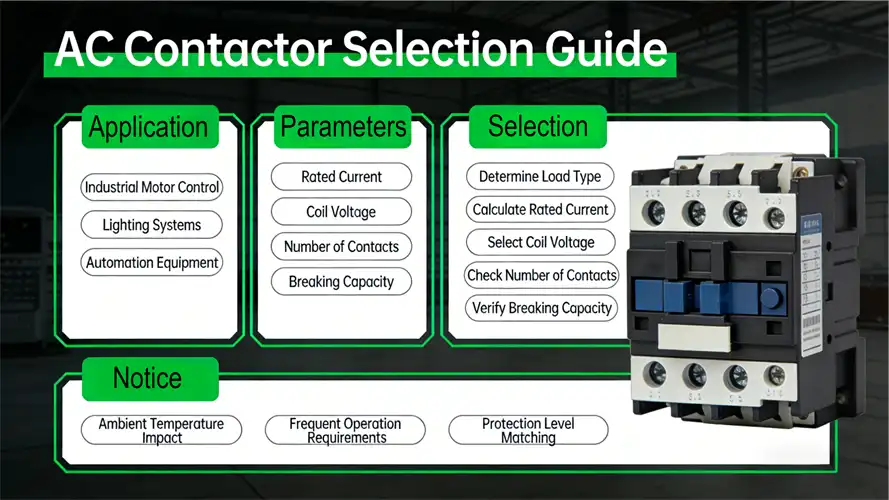
Automatic Transfer Switches (ATS) have a relatively complex structure. They typically include monitoring modules, control units, actuators (e.g., contactors or circuit breakers), and communication interfaces. High-end models may support remote monitoring and intelligent diagnostics. Maintenance requires professional technicians to periodically inspect sensor accuracy, controller programming, and mechanical wear. Consequently, ATS units have higher initial costs and maintenance expenses.
-
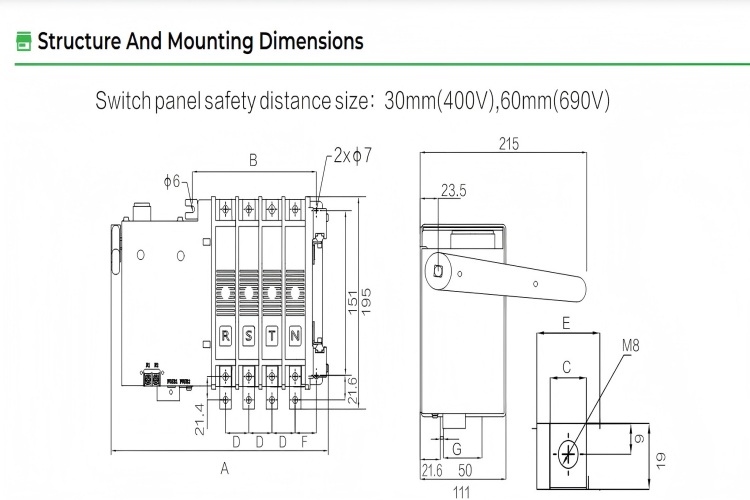
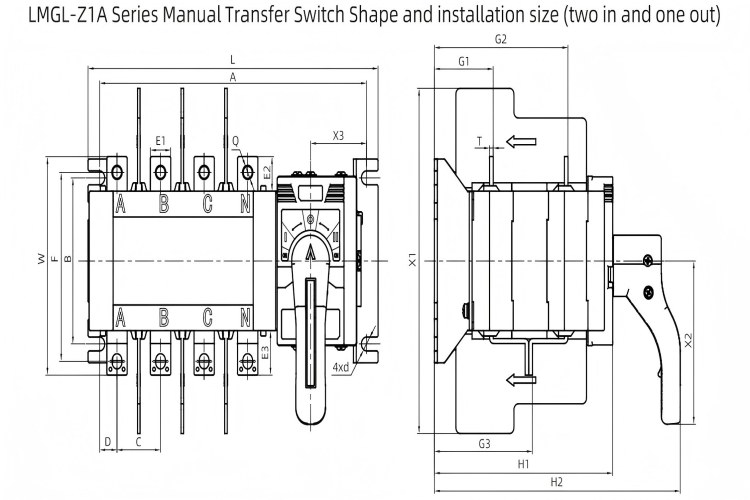
Manual Transfer Switches are structurally simple, consisting mainly of an operating handle, moving/fixed contacts, and mechanical interlocking devices. With no electronic components, they have low failure rates and require minimal maintenance—primarily periodic checks for contact oxidation and mechanical operation. They are low-cost solutions suitable for budgets with limited maintenance resources.
V. Safety and Operational Requirements
-
The Automatic Transfer Switch (ATS) enhances safety through automation, reducing the risk of human error. Features such as built-in electrical and mechanical interlocks prevent short circuits between primary and backup sources. The controller also monitors load conditions to avoid switching under load. However, installation, commissioning, and troubleshooting of ATS must be performed by qualified personnel to avoid equipment damage.
-
The safety of a Manual Transfer Switch depends entirely on the operator’s skill and knowledge. Incorrect operation (e.g., switching under load) may lead to arc flashes, short circuits, or electric shock hazards. Therefore, only trained personnel should operate these switches, following strict procedures such as power-down, verification of de-energization, and safe switching practices.
VI. Summary: How to Choose the Right Transfer Switch?
- The Automatic Transfer Switch (ATS) is the preferred solution for applications requiring unmanned operation, fast response, and high reliability, though it comes with higher costs and maintenance demands. The Manual Transfer Switch offers simplicity, low cost, and intuitive operation, making it suitable for smaller loads or scenarios where backup power is infrequently used.
- In practice, the choice should be based on criticality of power supply, budget constraints, and maintenance capabilities. Critical facilities should opt for an ATS, while manual switches can be effectively deployed in less critical or small-scale scenarios. This balanced approach ensures both economic efficiency and safety in the power system.
Contact Us
Share This Article
Making the Right Switch: The Power of ATS and Manual Options
In electrical power systems, Transfer Switches play a critical role in switching between primary and backup power sources, directly impacting power supply continuity and safety. Based on the operation method, transfer switches are mainly categorized into Automatic Transfer Switches (ATS) and Manual Transfer Switches. There are significant differences between the two in terms of working principles, applicable scenarios, and performance characteristics. The following provides a detailed comparison across multiple dimensions.
I. Core Differences in Working Principles and Operation Methods
-
An Automatic Transfer Switch (ATS) is an intelligent power switching device designed to operate without manual intervention. It utilizes built-in voltage sensors, controllers, and actuators to continuously monitor parameters such as voltage and frequency of the main power source. When a failure (e.g., outage, abnormal voltage) is detected, the ATS automatically starts the backup power source (e.g., generator). Once the backup power stabilizes, it swiftly transfers the load to the backup supply. When the main power is restored, it automatically switches back and shuts down the backup source. The entire process is programmable and fully automated.
-
A Manual Transfer Switch requires human operation to change the power source. Typically designed as a lever or rotary switch, it must be physically operated by personnel to move the contact from the “Main Power” position to the “Backup Power” position during a failure. After power restoration, the switch must be manually returned to the main source. This process relies entirely on human judgment and action, with no automatic monitoring or execution capabilities.
II. Comparison of Response Speed and Power Continuity
-
The key advantage of an Automatic Transfer Switch (ATS) is its rapid response. Using electronic monitoring and automatic actuation, the switching time is typically within milliseconds to seconds (e.g., 3–10 seconds), minimizing power interruption. This makes it ideal for applications demanding high power continuity, such as hospital operating rooms, data center servers, or industrial production lines, where even a brief outage can cause significant disruption or loss.
-
The response time of a Manual Transfer Switch is limited by human intervention. The process of identifying a power failure, reaching the switch location, and performing the transfer can take several minutes or longer, during which the load remains without power. While acceptable for non-critical applications like residential or small-scale commercial use, this delay is unsuitable for critical facilities such as those using medical or financial systems.
III. Application Scenarios and Scope
-
Owing to its automation and high reliability, the Automatic Transfer Switch (ATS) is predominantly used in critical facilities that require uninterrupted power, including:
-
Medical facilities: Life-support equipment in ICUs and operating rooms.
-
Industrial manufacturing: Continuous production lines in chemical or semiconductor plants.
-
Data and telecommunications: Server racks in data centers, communication base stations.
-
Public infrastructure: Emergency lighting and control systems in airports, subways, and large commercial complexes.
-
-
Manual Transfer Switches are suitable for applications where power interruptions are tolerable or where backup power is rarely used, such as:
-
Residential and small commercial settings: Switching between grid power and a backup generator.
-
Agricultural applications: Small irrigation pumps or greenhouse ventilation systems.
-
Temporary sites: Construction sites with backup power requirements.
-
Low-priority loads: Small office equipment or residential appliances.
-
IV. Differences in Structural Complexity and Maintenance Cost
-
Automatic Transfer Switches (ATS) have a relatively complex structure. They typically include monitoring modules, control units, actuators (e.g., contactors or circuit breakers), and communication interfaces. High-end models may support remote monitoring and intelligent diagnostics. Maintenance requires professional technicians to periodically inspect sensor accuracy, controller programming, and mechanical wear. Consequently, ATS units have higher initial costs and maintenance expenses.
-
Manual Transfer Switches are structurally simple, consisting mainly of an operating handle, moving/fixed contacts, and mechanical interlocking devices. With no electronic components, they have low failure rates and require minimal maintenance—primarily periodic checks for contact oxidation and mechanical operation. They are low-cost solutions suitable for budgets with limited maintenance resources.
V. Safety and Operational Requirements
-
The Automatic Transfer Switch (ATS) enhances safety through automation, reducing the risk of human error. Features such as built-in electrical and mechanical interlocks prevent short circuits between primary and backup sources. The controller also monitors load conditions to avoid switching under load. However, installation, commissioning, and troubleshooting of ATS must be performed by qualified personnel to avoid equipment damage.
-
The safety of a Manual Transfer Switch depends entirely on the operator’s skill and knowledge. Incorrect operation (e.g., switching under load) may lead to arc flashes, short circuits, or electric shock hazards. Therefore, only trained personnel should operate these switches, following strict procedures such as power-down, verification of de-energization, and safe switching practices.
VI. Summary: How to Choose the Right Transfer Switch?
- The Automatic Transfer Switch (ATS) is the preferred solution for applications requiring unmanned operation, fast response, and high reliability, though it comes with higher costs and maintenance demands. The Manual Transfer Switch offers simplicity, low cost, and intuitive operation, making it suitable for smaller loads or scenarios where backup power is infrequently used.
- In practice, the choice should be based on criticality of power supply, budget constraints, and maintenance capabilities. Critical facilities should opt for an ATS, while manual switches can be effectively deployed in less critical or small-scale scenarios. This balanced approach ensures both economic efficiency and safety in the power system.