

Blog
2026-2-14
IEC 63523 New Standard Implemented: Technological Upgrades and New Industry Trends for HVDC Fuses
Against the backdrop of the rapid development of new energy and high-voltage power transmission technologies, application scenarios for DC circuits with a rated voltage above 1500V are expanding continuously, and the requirements for the safety and precision of circuit protection are rising accordingly. IEC 63523, “Fuses for the protection of DC circuits with short time constants with a rated DC voltage above 1500V”, formulated by the International Electrotechnical Commission, provides a systematic specification for the characteristics and application of the 1500V DC fuse and other high-voltage direct current (HVDC) fuses. Meanwhile, it adapts to the development needs of industry technologies through a number of core revisions.
This standard not only sets an international benchmark for the design, production and testing of HVDC fuses, but also offers critical technical support for circuit protection in new energy storage, photovoltaic, high-voltage fast charging and other sectors.
1. Core Orientation of the New Standard: Focus on Exclusive Protection for HVDC Circuits with Short Time Constants
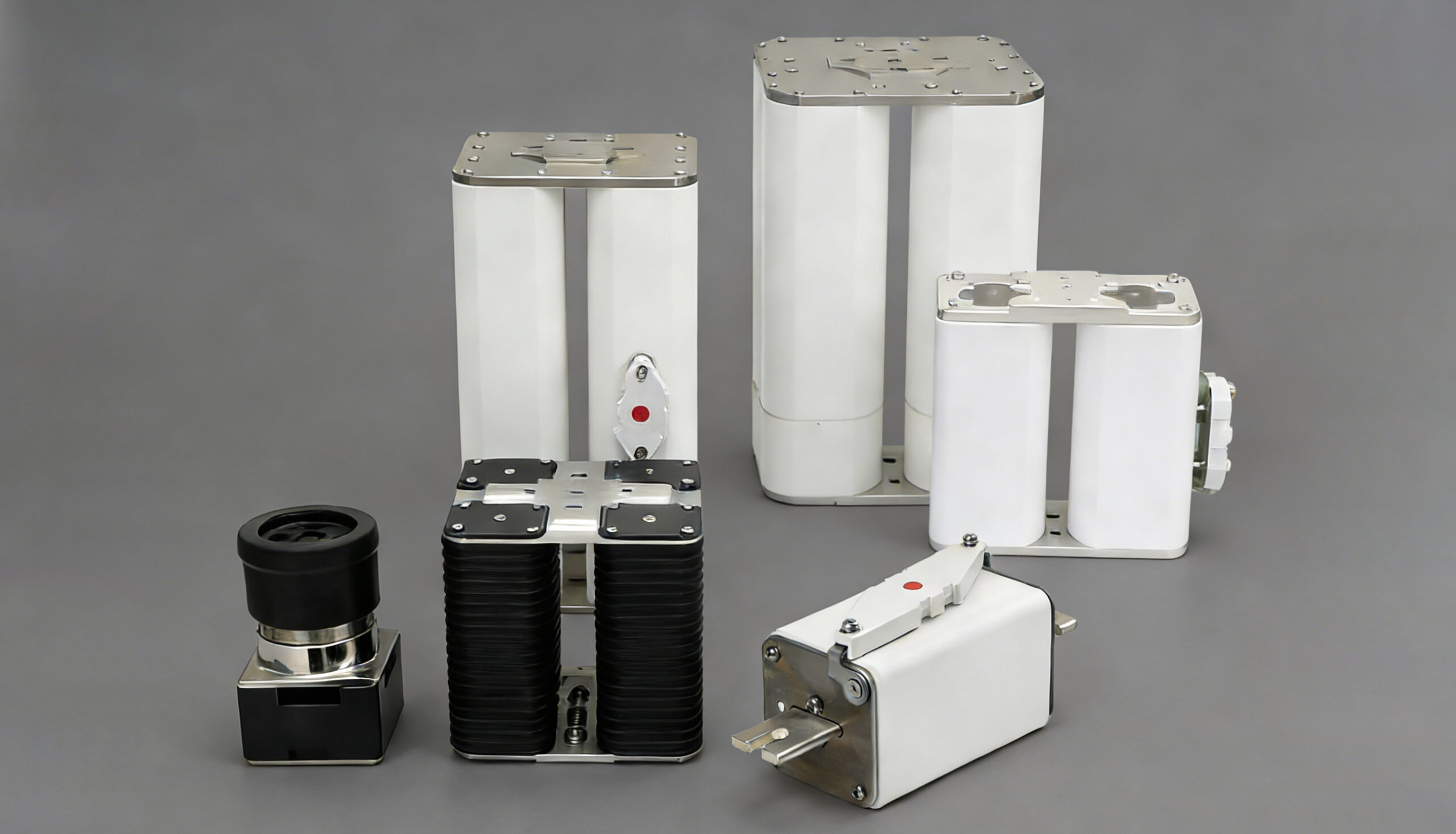
As the “safety fuse” of a circuit, a fuse is the last line of defense for the power system. In HVDC scenarios above 1500V, the short-time characteristic of circuits with a time constant not exceeding 3 ms places extreme demands on the response speed and breaking capacity of fuses. IEC 63523 is developed precisely for this niche scenario. It clearly specifies enclosed current-limiting fuses as its scope of application, which are specially designed to protect DC circuits with a rated voltage above 1500V and a time constant ≤3 ms. Its core objective is to unify the technical characteristic indicators of such fuses, filling the gap in standards for the protection of HVDC circuits with short time constants.
In terms of application scenarios, this standard directly aligns with the core demands of the current new energy industry: the upgrade of energy storage systems from 1500V to 2000V high-voltage platforms, the protection of the HVDC side of large-scale ground photovoltaic power stations, the circuit safety protection of high-voltage fast charging above 800V, and the high-voltage direct current (HVDC) systems of AI data centers. All these scenarios feature high voltage, large current and short-time response, imposing much higher professional requirements on the 1500V DC fuse than traditional low-voltage fuses, making precise design and strict performance control the core of product R&D.
2. Seven Core Revisions: Comprehensive Upgrades from Specifying Boundaries to Technical Details
IEC 63523 is not a newly formulated independent standard, but a precise optimization of the HVDC fuse standard based on industrial technological development. The seven core revisions realize the refined and professional upgrading of technical requirements for fuses in terms of application scope, product categories, material characteristics and test methods. They not only define the boundaries for product design and application, but also make testing and verification more in line with actual working conditions, laying a solid foundation for the standardized production and application of the 1500V DC fuse.
2.1 Defining Voltage Boundaries: Specifying the Maximum Rated Voltage to Adapt to the High-Voltage Upgrade Trend
This revision specifies the maximum rated voltage of applicable fuses in the standard for the first time, a move that directly responds to the technological iteration trend of the energy storage, photovoltaic and other industries upgrading from 1500V to 2000V high voltage. Previously, the voltage specification for HVDC fuses only limited the voltage to “above 1500V” without a clear upper limit, leading to inconsistent specifications and mismatched protection in product design and application. By defining the maximum value, the new standard provides a clear benchmark for enterprise production and a definite basis for engineers in component selection.
2.2 Clarifying Category Division: Class g and Class a Fuses with Dedicated Functions to Avoid Application Misjudgment
This is the most instructive adjustment for the application side in this revision, which clearly defines the core functional boundaries of the two types of fuses:
- Class g fuses: With dual protection capabilities against overload and short circuit, they can handle slow faults caused by mild overload and sudden faults due to short circuit in the circuit, and are suitable for main circuits with high requirements for comprehensive protection.
- Class a fuses: Only with short-circuit protection capability and featuring a faster response speed, they are applicable to auxiliary circuits that only need to cope with extreme short-circuit faults or scenarios where they are used in conjunction with other protective devices.
This clear division can effectively avoid selection errors by engineers due to category confusion—for example, using class a fuses with only short-circuit protection for energy storage main circuits requiring overload protection, which may cause potential safety hazards such as circuit overheating and equipment damage.
2.3 Strengthening Material Requirements: Heat and Fire Resistance of Insulating Components to Consolidate the Safety Foundation of High-Voltage Systems
In HVDC circuits, an arc with a temperature of several thousand degrees Celsius will be generated when a fuse operates. Insufficient heat and fire resistance of insulating components can easily lead to secondary accidents such as arc leakage and housing combustion. The new standard clearly requires that fuse components made of insulating materials must have adequate heat resistance and fire resistance, improving the safety redundancy of fuses from the material perspective. This requirement is also consistent with the mainstream technical routes of high-voltage fuses such as quartz sand arc extinction and ceramic housings.
2.4 Optimizing Temperature Measurement: Adjusting the Measuring Position of Ambient Air Temperature to Improve Data Accuracy
Ambient temperature is a key factor affecting the operating characteristics of fuses. The previous measuring position of ambient temperature was subject to interference from the self-temperature rise of fuses, resulting in measured data deviation and affecting the accuracy of fuse characteristic verification. This revision adjusts the measuring position of ambient air temperature, making the measured data more consistent with the actual working environment of fuses and providing more accurate basic data for the verification of key indicators such as temperature rise limits and power dissipation.
2.5 Upgrading Test Standards: Revising the Verification of Temperature Rise and Power Dissipation to Align with Actual Working Conditions
Excess temperature rise of fuses during long-term operation will accelerate melt aging, and excessive power dissipation will cause system energy loss. These two indicators are directly related to the reliability and energy efficiency of products. The new standard revises the test methods and result judgment requirements for the verification of temperature rise limits and power dissipation, optimizes the test conditions and judgment criteria, and makes the test results more in line with the actual outdoor and long-term working conditions of energy storage, photovoltaic and other industries, such as adapting to a temperature variation range of -30℃ to +60℃.
2.6 Expanding Service Categories: Adding Rated Current Verification for R, S, Bat and PV Categories to Adapt to Niche Scenarios
This is an important technological breakthrough in this revision. The new standard adds the rated current verification requirements for four service categories: R, S, Bat and PV, making the protection of fuses more tailored to the niche scenarios in the new energy industry. Each of the four categories corresponds to the core applications of the industry:
- PV category: Exclusive for photovoltaic applications, adapted to the protection requirements of the HVDC side of photovoltaic strings, and required to have the characteristics of low power consumption and wide temperature adaptability.
- Bat category: Exclusive for battery applications, targeting the high-voltage circuits of energy storage batteries and power batteries of new energy vehicles, and required to cope with the current fluctuations during battery charging and discharging.
- R/S category: Adapted to high-voltage DC transmission, industrial high-voltage equipment and other scenarios, meeting the differentiated current protection requirements of different DC circuits with short time constants.
The addition of rated current verification for specific categories provides exclusive technical indicators for fuses in niche scenarios, solving the problem of insufficient protection accuracy when general standards are applied to such scenarios.
2.7 Enhancing Breaking Capacity: Revising Breaking Test Requirements to Cope with High-Voltage and Large-Current Faults
Breaking capacity is the core indicator of fuses. A large current and high arc will be generated in the event of an HVDC short circuit. Insufficient breaking capacity of fuses will fail to extinguish the arc quickly, leading to sustained circuit short circuit and even explosion. The new standard revises the test methods, recovery voltage and result judgment requirements for breaking capacity verification, raises the requirements for fuses to break high-voltage short-circuit current, and clarifies the technical indicators of recovery voltage to ensure that the circuit can be cut off effectively after the fuse operates and prevent arc reignition.
3. Industrial Logic Behind the Standard: Technological Upgrades Drive Standard Iteration, and Standards Feed Back Industrial Development
The formulation and revision of the standard is not an isolated update, but the result of the joint action of technological iteration, market demand and industrial upgrading in the HVDC fuse industry. It reflects the core trend of the global power industry moving towards high voltage, high efficiency and high reliability, and also provides a clear development direction for the technological innovation and market application of HVDC fuses.
3.1 High-Voltage Upgrading of New Energy: Driving Technological Upgrades of Fuses and Spawning Standard Demands
In recent years, the high-voltage upgrading trend of the new energy industry has become particularly prominent: energy storage systems are upgrading from 1500V to 2000V, new energy vehicles are transforming from 400V platforms to 800V high-voltage fast charging platforms, and the DC side voltage of large-scale photovoltaic power stations has exceeded 1500V. High-voltage upgrading brings higher power density and transmission efficiency, but also makes the hazards of circuit faults increase exponentially, putting forward higher requirements for the breaking capacity, response speed and heat resistance of fuses. Traditional low-voltage fuse standards can no longer adapt to these new demands, and the implementation of the new standard fills this standard gap and provides a direction for technological upgrading.
3.2 Concentrated Market Pattern Brings New Opportunities
In China, fuse enterprises have made breakthroughs in the field of fuses for new energy vehicles and energy storage, and their technical indicators in 800V high-voltage fast charging and 1500V energy storage fuses have caught up with and even surpassed the international level. The unified standard provides a fair technical basis for domestic enterprises to break international technical barriers and participate in global market competition, accelerating the process of domestic substitution of HVDC fuse products.
3.3 Technological Development Trends: High Performance, Customization and Intelligence as the Core Directions
From the perspective of fuse technological development, the revision of the standard is also in line with the core development trends of the industry:
- High performance: Upgrading to higher voltage, larger breaking capacity and faster response speed, such as 2000V energy storage fuses and high-voltage products with a breaking capacity of 150kA.
- Customization: Launching customized products for niche scenarios such as photovoltaic, energy storage and power batteries, such as PV and Bat category fuses, to meet the differentiated demands of different scenarios.
- Intelligence: Integrating sensor and communication technologies to realize real-time monitoring of fuse status, upgrading from “passive protection” to “active early warning”, and adapting to the development needs of smart power grids and intelligent energy storage.
4. Professional Application Guide: How Engineers Adapt to the New Standard for Product Selection and Design
For technical engineers in the power and new energy industries, the implementation of the new standard means that product design, selection and testing must comply with the new standard requirements. The core adaptation can be carried out from three dimensions, which is also the key to ensuring the safe and stable operation of HVDC circuits and the rational application of fuse products.
4.1 Precise Selection
Select fuses of the corresponding category according to the application scenario—PV category for the photovoltaic DC side, Bat category for power battery circuits, class g for main circuits requiring overload and short-circuit protection, and class a for auxiliary circuits only requiring short-circuit protection. At the same time, strictly follow the rated voltage range specified in the standard to avoid mismatches between product specifications and circuit requirements.
4.2 Design Optimization
In the design of fuse components, priority should be given to insulating materials with high heat and fire resistance grades, such as ceramic housings and high-temperature resistant silicone grease sealing structures. Meanwhile, fully consider the arc extinction requirements of high-voltage arcs and adopt a current-limiting structure filled with quartz sand to improve the arc extinction efficiency and safety performance of fuses.
4.3 Test Verification
Conduct the verification of temperature rise, power dissipation and breaking capacity in accordance with the test methods revised in the new standard. In particular, the breaking capacity test must meet the new recovery voltage and result judgment requirements, and conduct multiple tests under actual working conditions to ensure the reliability and stability of products in practical application.
5. Conclusion: Standards as the Foundation, Safeguarding the Safe Development of the HVDC Industry
The formulation and revision of the standard marks a key milestone for the HVDC fuse industry, establishing an international unified norm for protecting 1500V+ short-time constant DC/PV circuits and underpinning the safe development of new energy, high-voltage power transmission and AI data centers. As the industry advances toward higher voltage and intelligence, HVDC fuses are set to see surging market demand and technological upgrading potential.
LVMA Electric’s R&D team closely tracks IEC standard iterations and commits to core HVDC fuse technology R&D—this is our inevitable move to adapt to market changes, and a critical path to breaking international technical barriers and achieving domestic substitution. Going forward, HVDC fuses will remain a vital safety cornerstone for the high-quality development of the new energy industry. The standard will continue to evolve with industrial practice, driving circuit protection technology toward greater safety, efficiency and intelligence, and safeguarding the global development of the HVDC industry.
Share This Article
IEC 63523 New Standard Implemented: Technological Upgrades and New Industry Trends for HVDC Fuses
Against the backdrop of the rapid development of new energy and high-voltage power transmission technologies, application scenarios for DC circuits with a rated voltage above 1500V are expanding continuously, and the requirements for the safety and precision of circuit protection are rising accordingly. IEC 63523, “Fuses for the protection of DC circuits with short time constants with a rated DC voltage above 1500V”, formulated by the International Electrotechnical Commission, provides a systematic specification for the characteristics and application of the 1500V DC fuse and other high-voltage direct current (HVDC) fuses. Meanwhile, it adapts to the development needs of industry technologies through a number of core revisions.
This standard not only sets an international benchmark for the design, production and testing of HVDC fuses, but also offers critical technical support for circuit protection in new energy storage, photovoltaic, high-voltage fast charging and other sectors.
1. Core Orientation of the New Standard: Focus on Exclusive Protection for HVDC Circuits with Short Time Constants
As the “safety fuse” of a circuit, a fuse is the last line of defense for the power system. In HVDC scenarios above 1500V, the short-time characteristic of circuits with a time constant not exceeding 3 ms places extreme demands on the response speed and breaking capacity of fuses. IEC 63523 is developed precisely for this niche scenario. It clearly specifies enclosed current-limiting fuses as its scope of application, which are specially designed to protect DC circuits with a rated voltage above 1500V and a time constant ≤3 ms. Its core objective is to unify the technical characteristic indicators of such fuses, filling the gap in standards for the protection of HVDC circuits with short time constants.
In terms of application scenarios, this standard directly aligns with the core demands of the current new energy industry: the upgrade of energy storage systems from 1500V to 2000V high-voltage platforms, the protection of the HVDC side of large-scale ground photovoltaic power stations, the circuit safety protection of high-voltage fast charging above 800V, and the high-voltage direct current (HVDC) systems of AI data centers. All these scenarios feature high voltage, large current and short-time response, imposing much higher professional requirements on the 1500V DC fuse than traditional low-voltage fuses, making precise design and strict performance control the core of product R&D.
2. Seven Core Revisions: Comprehensive Upgrades from Specifying Boundaries to Technical Details
IEC 63523 is not a newly formulated independent standard, but a precise optimization of the HVDC fuse standard based on industrial technological development. The seven core revisions realize the refined and professional upgrading of technical requirements for fuses in terms of application scope, product categories, material characteristics and test methods. They not only define the boundaries for product design and application, but also make testing and verification more in line with actual working conditions, laying a solid foundation for the standardized production and application of the 1500V DC fuse.
2.1 Defining Voltage Boundaries: Specifying the Maximum Rated Voltage to Adapt to the High-Voltage Upgrade Trend
This revision specifies the maximum rated voltage of applicable fuses in the standard for the first time, a move that directly responds to the technological iteration trend of the energy storage, photovoltaic and other industries upgrading from 1500V to 2000V high voltage. Previously, the voltage specification for HVDC fuses only limited the voltage to “above 1500V” without a clear upper limit, leading to inconsistent specifications and mismatched protection in product design and application. By defining the maximum value, the new standard provides a clear benchmark for enterprise production and a definite basis for engineers in component selection.
2.2 Clarifying Category Division: Class g and Class a Fuses with Dedicated Functions to Avoid Application Misjudgment
This is the most instructive adjustment for the application side in this revision, which clearly defines the core functional boundaries of the two types of fuses:
- Class g fuses: With dual protection capabilities against overload and short circuit, they can handle slow faults caused by mild overload and sudden faults due to short circuit in the circuit, and are suitable for main circuits with high requirements for comprehensive protection.
- Class a fuses: Only with short-circuit protection capability and featuring a faster response speed, they are applicable to auxiliary circuits that only need to cope with extreme short-circuit faults or scenarios where they are used in conjunction with other protective devices.
This clear division can effectively avoid selection errors by engineers due to category confusion—for example, using class a fuses with only short-circuit protection for energy storage main circuits requiring overload protection, which may cause potential safety hazards such as circuit overheating and equipment damage.
2.3 Strengthening Material Requirements: Heat and Fire Resistance of Insulating Components to Consolidate the Safety Foundation of High-Voltage Systems
In HVDC circuits, an arc with a temperature of several thousand degrees Celsius will be generated when a fuse operates. Insufficient heat and fire resistance of insulating components can easily lead to secondary accidents such as arc leakage and housing combustion. The new standard clearly requires that fuse components made of insulating materials must have adequate heat resistance and fire resistance, improving the safety redundancy of fuses from the material perspective. This requirement is also consistent with the mainstream technical routes of high-voltage fuses such as quartz sand arc extinction and ceramic housings.
2.4 Optimizing Temperature Measurement: Adjusting the Measuring Position of Ambient Air Temperature to Improve Data Accuracy
Ambient temperature is a key factor affecting the operating characteristics of fuses. The previous measuring position of ambient temperature was subject to interference from the self-temperature rise of fuses, resulting in measured data deviation and affecting the accuracy of fuse characteristic verification. This revision adjusts the measuring position of ambient air temperature, making the measured data more consistent with the actual working environment of fuses and providing more accurate basic data for the verification of key indicators such as temperature rise limits and power dissipation.
2.5 Upgrading Test Standards: Revising the Verification of Temperature Rise and Power Dissipation to Align with Actual Working Conditions
Excess temperature rise of fuses during long-term operation will accelerate melt aging, and excessive power dissipation will cause system energy loss. These two indicators are directly related to the reliability and energy efficiency of products. The new standard revises the test methods and result judgment requirements for the verification of temperature rise limits and power dissipation, optimizes the test conditions and judgment criteria, and makes the test results more in line with the actual outdoor and long-term working conditions of energy storage, photovoltaic and other industries, such as adapting to a temperature variation range of -30℃ to +60℃.
2.6 Expanding Service Categories: Adding Rated Current Verification for R, S, Bat and PV Categories to Adapt to Niche Scenarios
This is an important technological breakthrough in this revision. The new standard adds the rated current verification requirements for four service categories: R, S, Bat and PV, making the protection of fuses more tailored to the niche scenarios in the new energy industry. Each of the four categories corresponds to the core applications of the industry:
- PV category: Exclusive for photovoltaic applications, adapted to the protection requirements of the HVDC side of photovoltaic strings, and required to have the characteristics of low power consumption and wide temperature adaptability.
- Bat category: Exclusive for battery applications, targeting the high-voltage circuits of energy storage batteries and power batteries of new energy vehicles, and required to cope with the current fluctuations during battery charging and discharging.
- R/S category: Adapted to high-voltage DC transmission, industrial high-voltage equipment and other scenarios, meeting the differentiated current protection requirements of different DC circuits with short time constants.
The addition of rated current verification for specific categories provides exclusive technical indicators for fuses in niche scenarios, solving the problem of insufficient protection accuracy when general standards are applied to such scenarios.
2.7 Enhancing Breaking Capacity: Revising Breaking Test Requirements to Cope with High-Voltage and Large-Current Faults
Breaking capacity is the core indicator of fuses. A large current and high arc will be generated in the event of an HVDC short circuit. Insufficient breaking capacity of fuses will fail to extinguish the arc quickly, leading to sustained circuit short circuit and even explosion. The new standard revises the test methods, recovery voltage and result judgment requirements for breaking capacity verification, raises the requirements for fuses to break high-voltage short-circuit current, and clarifies the technical indicators of recovery voltage to ensure that the circuit can be cut off effectively after the fuse operates and prevent arc reignition.
3. Industrial Logic Behind the Standard: Technological Upgrades Drive Standard Iteration, and Standards Feed Back Industrial Development
The formulation and revision of the standard is not an isolated update, but the result of the joint action of technological iteration, market demand and industrial upgrading in the HVDC fuse industry. It reflects the core trend of the global power industry moving towards high voltage, high efficiency and high reliability, and also provides a clear development direction for the technological innovation and market application of HVDC fuses.
3.1 High-Voltage Upgrading of New Energy: Driving Technological Upgrades of Fuses and Spawning Standard Demands
In recent years, the high-voltage upgrading trend of the new energy industry has become particularly prominent: energy storage systems are upgrading from 1500V to 2000V, new energy vehicles are transforming from 400V platforms to 800V high-voltage fast charging platforms, and the DC side voltage of large-scale photovoltaic power stations has exceeded 1500V. High-voltage upgrading brings higher power density and transmission efficiency, but also makes the hazards of circuit faults increase exponentially, putting forward higher requirements for the breaking capacity, response speed and heat resistance of fuses. Traditional low-voltage fuse standards can no longer adapt to these new demands, and the implementation of the new standard fills this standard gap and provides a direction for technological upgrading.
3.2 Concentrated Market Pattern Brings New Opportunities
In China, fuse enterprises have made breakthroughs in the field of fuses for new energy vehicles and energy storage, and their technical indicators in 800V high-voltage fast charging and 1500V energy storage fuses have caught up with and even surpassed the international level. The unified standard provides a fair technical basis for domestic enterprises to break international technical barriers and participate in global market competition, accelerating the process of domestic substitution of HVDC fuse products.
3.3 Technological Development Trends: High Performance, Customization and Intelligence as the Core Directions
From the perspective of fuse technological development, the revision of the standard is also in line with the core development trends of the industry:
- High performance: Upgrading to higher voltage, larger breaking capacity and faster response speed, such as 2000V energy storage fuses and high-voltage products with a breaking capacity of 150kA.
- Customization: Launching customized products for niche scenarios such as photovoltaic, energy storage and power batteries, such as PV and Bat category fuses, to meet the differentiated demands of different scenarios.
- Intelligence: Integrating sensor and communication technologies to realize real-time monitoring of fuse status, upgrading from “passive protection” to “active early warning”, and adapting to the development needs of smart power grids and intelligent energy storage.
4. Professional Application Guide: How Engineers Adapt to the New Standard for Product Selection and Design
For technical engineers in the power and new energy industries, the implementation of the new standard means that product design, selection and testing must comply with the new standard requirements. The core adaptation can be carried out from three dimensions, which is also the key to ensuring the safe and stable operation of HVDC circuits and the rational application of fuse products.
4.1 Precise Selection
Select fuses of the corresponding category according to the application scenario—PV category for the photovoltaic DC side, Bat category for power battery circuits, class g for main circuits requiring overload and short-circuit protection, and class a for auxiliary circuits only requiring short-circuit protection. At the same time, strictly follow the rated voltage range specified in the standard to avoid mismatches between product specifications and circuit requirements.
4.2 Design Optimization
In the design of fuse components, priority should be given to insulating materials with high heat and fire resistance grades, such as ceramic housings and high-temperature resistant silicone grease sealing structures. Meanwhile, fully consider the arc extinction requirements of high-voltage arcs and adopt a current-limiting structure filled with quartz sand to improve the arc extinction efficiency and safety performance of fuses.
4.3 Test Verification
Conduct the verification of temperature rise, power dissipation and breaking capacity in accordance with the test methods revised in the new standard. In particular, the breaking capacity test must meet the new recovery voltage and result judgment requirements, and conduct multiple tests under actual working conditions to ensure the reliability and stability of products in practical application.
5. Conclusion: Standards as the Foundation, Safeguarding the Safe Development of the HVDC Industry
The formulation and revision of the standard marks a key milestone for the HVDC fuse industry, establishing an international unified norm for protecting 1500V+ short-time constant DC/PV circuits and underpinning the safe development of new energy, high-voltage power transmission and AI data centers. As the industry advances toward higher voltage and intelligence, HVDC fuses are set to see surging market demand and technological upgrading potential.
LVMA Electric’s R&D team closely tracks IEC standard iterations and commits to core HVDC fuse technology R&D—this is our inevitable move to adapt to market changes, and a critical path to breaking international technical barriers and achieving domestic substitution. Going forward, HVDC fuses will remain a vital safety cornerstone for the high-quality development of the new energy industry. The standard will continue to evolve with industrial practice, driving circuit protection technology toward greater safety, efficiency and intelligence, and safeguarding the global development of the HVDC industry.