
Blog
2026-3-31
Common Electrical Symbols
Learning electrical symbols is a gradual process. First, understand the rules of the symbols, then learn how to interpret diagrams, and finally solidify your understanding by analyzing actual circuit diagrams. Through systematic study of textbooks, consulting standards, and extensive practice, you can gradually master the language of electrical engineering.
| Category | Name | Abbreviation | Remarks |
|---|---|---|---|
| Basic Electrical Quantities | Alternating Current | AC (Alternating Current) | Current that changes direction periodically |
| Direct Current | DC (Direct Current) | Current with constant direction | |
| Current | I (Current) | Unit: Ampere (A) | |
| Voltage | U (Voltage) | Unit: Volt (V) | |
| Frequency | f (Frequency) | Unit: Hertz (Hz) | |
| Active Power | P (Active Power) | Unit: Watt (W) | |
| Reactive Power | Q (Reactive Power) | Unit: Var | |
| Apparent Power | S (Apparent Power) | Unit: Volt-Ampere (VA) | |
| Conductors & Busbars | Live (Single-phase) | L (Live) | Usually brown or red |
| Neutral | N (Neutral) | Usually blue | |
| Protective Earth | PE (Protective Earth) | Yellow-green striped wire, for safety | |
| Combined Neutral & Earth | PEN (Protective Earth and Neutral) | Combined neutral and protective earth conductor | |
| Busbar | W (Busbar) | Conductor that distributes electrical energy | |
| DC Busbar | WB (DC Busbar) | Busbar in DC systems | |
| Common Components | Resistor | R (Resistor) | Limits current |
| Capacitor | C (Capacitor) | Stores electrical charge | |
| Inductor / Coil | L (Inductor/Coil) | Stores magnetic energy | |
| Motor | M (Motor) | Converts electrical energy to mechanical energy | |
| Generator | G (Generator) | Converts mechanical energy to electrical energy | |
| Transformer | T (Transformer) | Changes voltage, current, and impedance | |
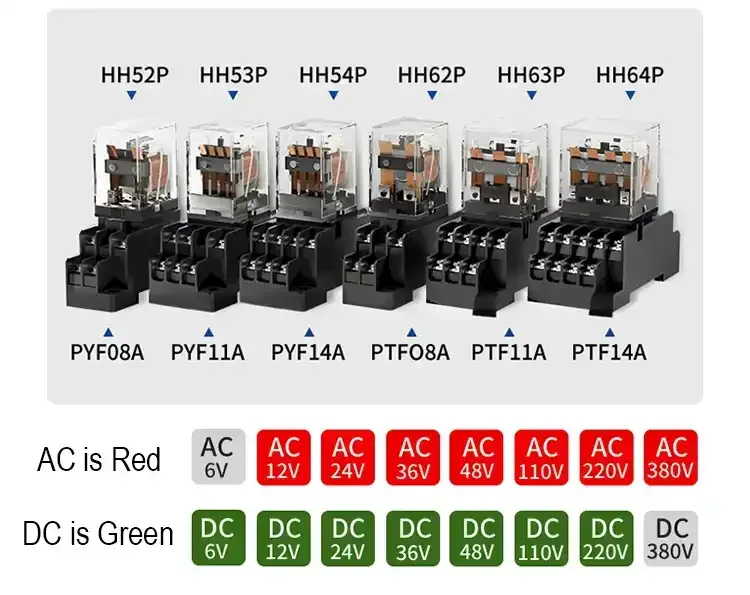
| Relays & Contactors | Relay | K (Relay) | Uses a small current to control a large current circuit |
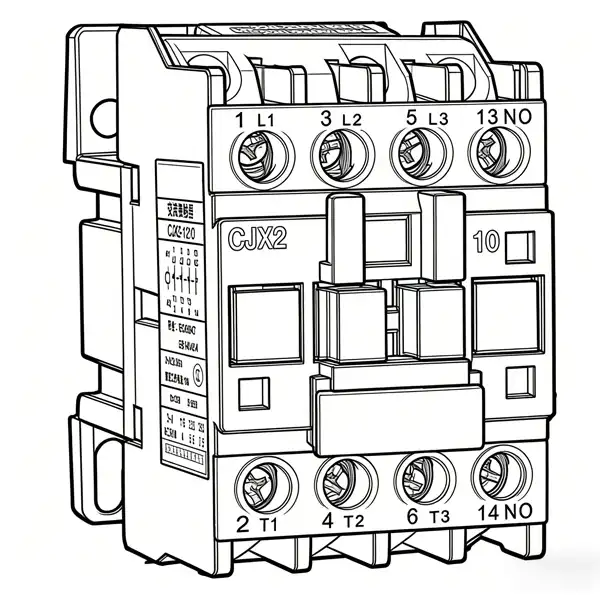
| Contactor | KM (Contactor) | For frequently switching main circuits | |
| Thermal Relay / Overload Relay | FR/KH (Thermal Relay) | For motor overload protection | |
| Time Relay | KT (Time Relay) | Relay with time-delay action | |
| Auxiliary Relay / Intermediate Relay | KA/KM (Auxiliary Relay) | Adds extra contacts or capacity | |
| Current Relay | KA (Current Relay) | Operates based on current changes | |
| Voltage Relay | KV (Voltage Relay) | Operates based on voltage changes | |
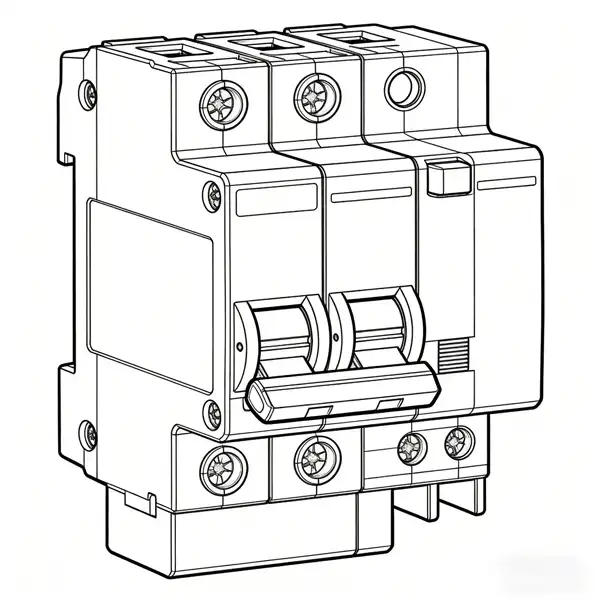
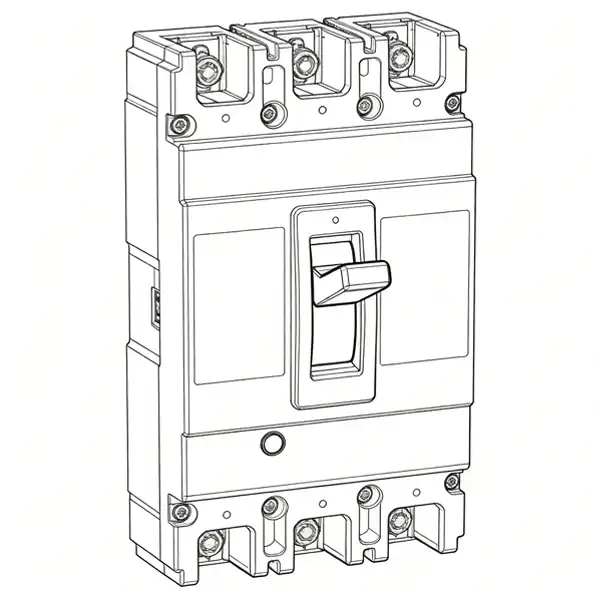
| Switches & Pushbuttons | Circuit Breaker | QF (Circuit Breaker) | Provides overload and short-circuit protection |
| Isolator / Disconnector | QS (Isolator/Disconnector) | No arc extinguishing capability; used for isolation | |
| Push Button | SB (Push Button) | Momentarily makes or breaks a small-current circuit | |
| Selector Switch | SA (Selector Switch) | Used to switch circuit states | |
| Limit Switch | SQ (Limit Switch) | Detects mechanical travel limits | |
| Proximity Switch | SQP (Proximity Switch) | Non-contact object detection | |
| Normally Open Contact | NO (Normally Open) | Open in rest state, closes when actuated | |
| Normally Closed Contact | NC (Normally Closed) | Closed in rest state, opens when actuated | |
| Instrument Transformers | Current Transformer | TA (Current Transformer) | Scales current for measurement or protection |
| Voltage Transformer | TV (Voltage Transformer) | Scales voltage for measurement or protection | |
| Instruments & Measurements | Ammeter | PA (Ammeter) | Measures current |
| Voltmeter | PV (Voltmeter) | Measures voltage | |
| Frequency Meter | PF (Frequency Meter) | Measures frequency | |
| Power Factor Meter | PPF (Power Factor Meter) | Measures power factor | |
| Active Power Meter | PW (Active Power Meter) | Measures active power | |
| Active Energy Meter | PJ (Active Energy Meter) | Measures active energy consumption | |
| Protection Devices | Fuse | FU (Fuse) | Overcurrent protection |
| Surge Arrester | F (Surge Arrester) | Protects against lightning overvoltages | |
| Voltage Limiting Protection Device | FV (Voltage Limiting Protection) | Suppresses overvoltage (e.g., varistor) | |
| Actuators | Solenoid Valve | YV (Solenoid Valve) | Controls fluid flow when energized |
| Closing Coil | YC (Closing Coil) | Energizes to close a circuit breaker | |
| Tripping Coil | YT (Tripping Coil) | Energizes to trip a circuit breaker | |
| Control Devices | Frequency Converter / VFD | UF/U1 (Frequency Converter) | Changes motor supply frequency for speed control |
| Rectifier | U (Rectifier) | Converts AC to DC | |
| Inverter | UI (Inverter) | Converts DC to AC | |
| Sensors & Transmitters | Pressure Transducer / Transmitter | BP (Pressure Transducer) | Detects pressure and converts to electrical signal |
| Temperature Transducer / Transmitter | BT (Temperature Transducer) | Detects temperature and converts to electrical signal | |
| Signals & Indicators | Indicator Light | HL (Indicator Light) | Shows equipment status |
| Red Indicator Light | HR (Red Indicator) | Typically indicates running, fault, or alarm | |
| Green Indicator Light | HG (Green Indicator) | Typically indicates stop, power OK, or position reached | |
| Optical Signal | HS (Optical Signal) | Optical signal indication | |
| Circuits & Wiring | Power Main | WPM (Power Main) | Main power supply line |
| Lighting Main | WLM (Lighting Main) | Main lighting supply line | |
| Lighting Branch | WL (Lighting Branch) | Branch circuit for lighting | |
| Other Common Symbols | Automatic Power Source Transfer Equipment | AAT (Automatic Power Source Transfer Equipment) | Switches between main and backup power |
| Push Button (general) | SB (Switch Button) | Manual control switch | |
| Terminal Block | XT (Terminal Block) | For connecting wires | |
| Plug | XP (Plug) | Male part of a connector | |
| Socket | XS (Socket) | Female part of a connector |
Contact Us
Share This Article

Common Electrical Symbols
Learning electrical symbols is a gradual process. First, understand the rules of the symbols, then learn how to interpret diagrams, and finally solidify your understanding by analyzing actual circuit diagrams. Through systematic study of textbooks, consulting standards, and extensive practice, you can gradually master the language of electrical engineering.
| Category | Name | Abbreviation | Remarks |
|---|---|---|---|
| Basic Electrical Quantities | Alternating Current | AC (Alternating Current) | Current that changes direction periodically |
| Direct Current | DC (Direct Current) | Current with constant direction | |
| Current | I (Current) | Unit: Ampere (A) | |
| Voltage | U (Voltage) | Unit: Volt (V) | |
| Frequency | f (Frequency) | Unit: Hertz (Hz) | |
| Active Power | P (Active Power) | Unit: Watt (W) | |
| Reactive Power | Q (Reactive Power) | Unit: Var | |
| Apparent Power | S (Apparent Power) | Unit: Volt-Ampere (VA) | |
| Conductors & Busbars | Live (Single-phase) | L (Live) | Usually brown or red |
| Neutral | N (Neutral) | Usually blue | |
| Protective Earth | PE (Protective Earth) | Yellow-green striped wire, for safety | |
| Combined Neutral & Earth | PEN (Protective Earth and Neutral) | Combined neutral and protective earth conductor | |
| Busbar | W (Busbar) | Conductor that distributes electrical energy | |
| DC Busbar | WB (DC Busbar) | Busbar in DC systems | |
| Common Components | Resistor | R (Resistor) | Limits current |
| Capacitor | C (Capacitor) | Stores electrical charge | |
| Inductor / Coil | L (Inductor/Coil) | Stores magnetic energy | |
| Motor | M (Motor) | Converts electrical energy to mechanical energy | |
| Generator | G (Generator) | Converts mechanical energy to electrical energy | |
| Transformer | T (Transformer) | Changes voltage, current, and impedance | |
| Relays & Contactors | Relay | K (Relay) | Uses a small current to control a large current circuit |
| Contactor | KM (Contactor) | For frequently switching main circuits | |
| Thermal Relay / Overload Relay | FR/KH (Thermal Relay) | For motor overload protection | |
| Time Relay | KT (Time Relay) | Relay with time-delay action | |
| Auxiliary Relay / Intermediate Relay | KA/KM (Auxiliary Relay) | Adds extra contacts or capacity | |
| Current Relay | KA (Current Relay) | Operates based on current changes | |
| Voltage Relay | KV (Voltage Relay) | Operates based on voltage changes | |
| Switches & Pushbuttons | Circuit Breaker | QF (Circuit Breaker) | Provides overload and short-circuit protection |
| Isolator / Disconnector | QS (Isolator/Disconnector) | No arc extinguishing capability; used for isolation | |
| Push Button | SB (Push Button) | Momentarily makes or breaks a small-current circuit | |
| Selector Switch | SA (Selector Switch) | Used to switch circuit states | |
| Limit Switch | SQ (Limit Switch) | Detects mechanical travel limits | |
| Proximity Switch | SQP (Proximity Switch) | Non-contact object detection | |
| Normally Open Contact | NO (Normally Open) | Open in rest state, closes when actuated | |
| Normally Closed Contact | NC (Normally Closed) | Closed in rest state, opens when actuated | |
| Instrument Transformers | Current Transformer | TA (Current Transformer) | Scales current for measurement or protection |
| Voltage Transformer | TV (Voltage Transformer) | Scales voltage for measurement or protection | |
| Instruments & Measurements | Ammeter | PA (Ammeter) | Measures current |
| Voltmeter | PV (Voltmeter) | Measures voltage | |
| Frequency Meter | PF (Frequency Meter) | Measures frequency | |
| Power Factor Meter | PPF (Power Factor Meter) | Measures power factor | |
| Active Power Meter | PW (Active Power Meter) | Measures active power | |
| Active Energy Meter | PJ (Active Energy Meter) | Measures active energy consumption | |
| Protection Devices | Fuse | FU (Fuse) | Overcurrent protection |
| Surge Arrester | F (Surge Arrester) | Protects against lightning overvoltages | |
| Voltage Limiting Protection Device | FV (Voltage Limiting Protection) | Suppresses overvoltage (e.g., varistor) | |
| Actuators | Solenoid Valve | YV (Solenoid Valve) | Controls fluid flow when energized |
| Closing Coil | YC (Closing Coil) | Energizes to close a circuit breaker | |
| Tripping Coil | YT (Tripping Coil) | Energizes to trip a circuit breaker | |
| Control Devices | Frequency Converter / VFD | UF/U1 (Frequency Converter) | Changes motor supply frequency for speed control |
| Rectifier | U (Rectifier) | Converts AC to DC | |
| Inverter | UI (Inverter) | Converts DC to AC | |
| Sensors & Transmitters | Pressure Transducer / Transmitter | BP (Pressure Transducer) | Detects pressure and converts to electrical signal |
| Temperature Transducer / Transmitter | BT (Temperature Transducer) | Detects temperature and converts to electrical signal | |
| Signals & Indicators | Indicator Light | HL (Indicator Light) | Shows equipment status |
| Red Indicator Light | HR (Red Indicator) | Typically indicates running, fault, or alarm | |
| Green Indicator Light | HG (Green Indicator) | Typically indicates stop, power OK, or position reached | |
| Optical Signal | HS (Optical Signal) | Optical signal indication | |
| Circuits & Wiring | Power Main | WPM (Power Main) | Main power supply line |
| Lighting Main | WLM (Lighting Main) | Main lighting supply line | |
| Lighting Branch | WL (Lighting Branch) | Branch circuit for lighting | |
| Other Common Symbols | Automatic Power Source Transfer Equipment | AAT (Automatic Power Source Transfer Equipment) | Switches between main and backup power |
| Push Button (general) | SB (Switch Button) | Manual control switch | |
| Terminal Block | XT (Terminal Block) | For connecting wires | |
| Plug | XP (Plug) | Male part of a connector | |
| Socket | XS (Socket) | Female part of a connector |