

Blog
2026-2-7
What is an Air Circuit Breaker (ACB)?
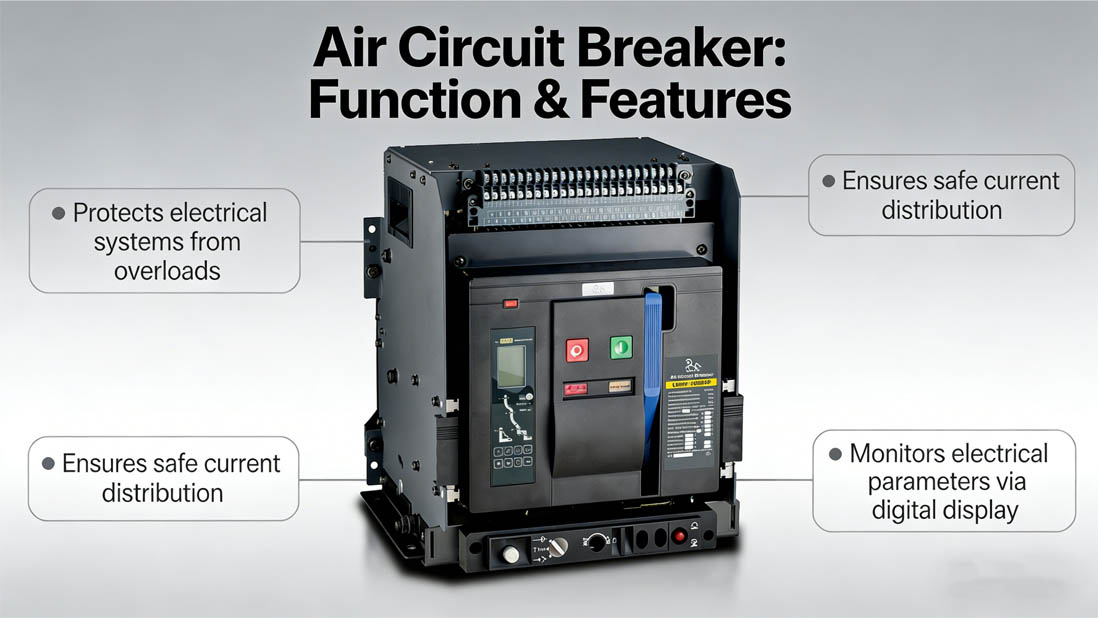
What is an Air Circuit Breaker (ACB)? Key Functions & Applications
In the world of electrical power distribution, safety and reliability are non-negotiable. Every industrial facility, commercial building, and large-scale power system relies on critical components to protect equipment, prevent electrical hazards, and ensure uninterrupted power supply. One such indispensable device is the Air Circuit Breaker (ACB) — a heavy-duty switching and protection device designed to handle high-voltage, high-current electrical circuits. Today, we’ll break down what an ACB is, how it works, its core functions, and where it’s most commonly used, helping you understand its role in keeping electrical systems running smoothly and safely.
Definition: What Exactly is an Air Circuit Breaker?
An Air Circuit Breaker (ACB) is a type of electrical circuit breaker that uses air as the arc quenching medium to interrupt fault currents and normal operating currents in electrical circuits. Unlike miniature circuit breakers (MCBs) or molded case circuit breakers (MCCBs) which are designed for low to medium current applications, ACBs are engineered for heavy-duty use, typically handling voltages above 600V and currents ranging from 630A to 6300A (and even higher in some industrial-grade models).
The “air” in its name refers to how it extinguishes the electric arc that forms when the breaker opens to interrupt current flow. When a fault occurs (such as an overload or short circuit), the ACB’s internal mechanism triggers the contacts to separate, creating an arc. The breaker then uses compressed air or natural air flow to cool and stretch the arc until it is extinguished, cutting off the circuit and preventing damage to connected equipment or wiring.
Key Specifications & Parameters of ACBs
Understanding the key parameters of ACBs is essential for selecting the right device for specific applications. Below are the most critical specifications to consider, along with typical ranges for industrial and commercial ACBs:
-
Rated Voltage (Ue): The maximum continuous voltage the ACB can safely handle, typically ranging from 400V to 15kV (for low to medium voltage applications). Industrial-grade models may support higher voltages up to 36kV for power distribution systems.
-
Rated Current (Ie): The long-term maximum current the breaker can carry without tripping, usually from 630A to 6300A. Customized models can reach up to 12500A for heavy-duty industrial scenarios.
-
Breaking Capacity (Icu/Ics): Icu (Ultimate Breaking Capacity) is the maximum fault current the ACB can interrupt once and still be safe to use; Ics (Service Breaking Capacity) is the fault current it can interrupt multiple times. Typical ranges: 50kA to 200kA (Icu) and 31.5kA to 125kA (Ics).
-
Operating Mechanism: Manual (hand lever) or automatic (electric motor-operated), with optional remote control for integration into smart electrical systems. Most modern ACBs support both manual and electric operation for flexibility.
-
Tripping Mode: Thermal-magnetic (for overload and short circuit protection) or electronic (for more precise protection, adjustable trip settings). Electronic tripping ACBs are ideal for sensitive equipment that requires customized protection curves.
-
Protection Class: Typically IP30 to IP54, indicating protection against dust and water ingress. IP54-rated ACBs are suitable for outdoor or harsh industrial environments, while IP30 is sufficient for indoor switchgear cabinets.
Core Functions of an Air Circuit Breaker
ACBs are more than just “on/off” switches — they are multi-functional protection devices that play four key roles in electrical systems:
1. Overload Protection
Overloads occur when the current flowing through a circuit exceeds its rated capacity for an extended period. This can happen due to faulty equipment, incorrect wiring, or connecting too many devices to a single circuit. ACBs detect overloads using thermal relays (or electronic sensors in modern models) and automatically trip to open the circuit, preventing overheating that could lead to fires or equipment failure.
2. Short Circuit Protection
A short circuit is a dangerous fault where current bypasses the normal load, creating an extremely high current flow (often thousands of amps) in a fraction of a second. Short circuits can cause severe damage, electrical fires, or even explosions. ACBs are designed to respond rapidly to short circuits — their magnetic trip mechanism triggers within milliseconds, separating the contacts and extinguishing the arc to cut off the fault current immediately.
3. Under-Voltage Protection
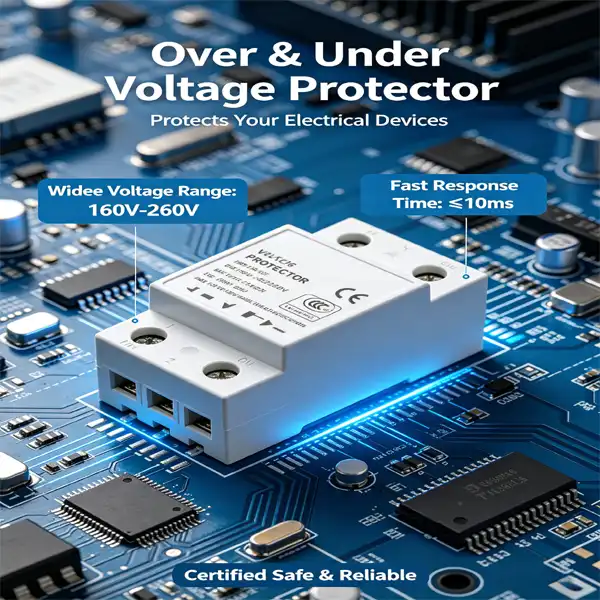
Under-voltage (or low voltage) occurs when the supply voltage drops below the rated level. This can damage sensitive electrical equipment (such as motors, transformers, or control systems) that requires a stable voltage to operate. Many ACBs include under-voltage release (UVR) mechanisms that trip the breaker if the voltage falls too low, protecting equipment from damage and ensuring safe restart once voltage is restored.
4. Circuit Switching
In addition to protection, ACBs also serve as manual or automatic switching devices. They can be used to manually turn circuits on or off during maintenance, or integrated into automated systems to switch circuits remotely. Unlike fuses (which are one-time use), ACBs are reusable — after tripping due to a fault, they can be reset once the issue is resolved, reducing maintenance costs and downtime.
Where Are Air Circuit Breakers Used?
Due to their high current and voltage handling capabilities, ACBs are primarily used in large-scale electrical systems where reliable protection is critical. Common applications include:
Industrial Facilities
Factories, manufacturing plants, and industrial warehouses rely on ACBs to protect heavy machinery (such as motors, pumps, and compressors), power distribution panels, and main electrical feeders. They are often installed in the main switchgear of industrial facilities to provide primary protection for the entire electrical system.
Commercial Buildings
High-rise buildings, shopping malls, hotels, and office complexes with large electrical loads use ACBs in their main distribution boards. They protect the building’s electrical infrastructure, including lighting systems, HVAC units, and elevator systems, ensuring safety for occupants and preventing costly downtime.
Power Generation & Distribution
Power plants, substations, and electrical grids use ACBs to control and protect the flow of electricity from generators to transmission lines and ultimately to end users. They are essential for maintaining grid stability and preventing widespread power outages due to faults.
Renewable Energy Systems
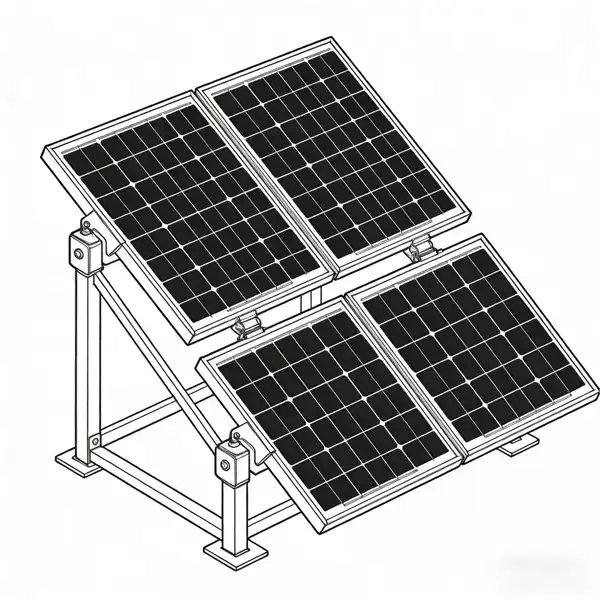
With the growth of solar farms, wind farms, and other renewable energy projects, ACBs are increasingly used to protect the high-voltage circuits in these systems. They ensure safe operation of inverters, transformers, and power distribution equipment, helping to maximize energy efficiency and reliability.
Key Advantages of Air Circuit Breakers
Compared to other types of circuit breakers (such as oil-filled or vacuum circuit breakers), ACBs offer several unique benefits:
-
Cost-Effective: ACBs are more affordable than vacuum or oil circuit breakers, making them a popular choice for medium to high-voltage applications where budget is a consideration.
-
Easy Maintenance: Unlike oil-filled breakers (which require regular oil changes) or vacuum breakers (which require specialized maintenance), ACBs are easy to inspect and maintain. Their air-based arc quenching system is simple and reliable, reducing maintenance time and costs.
-
High Breaking Capacity: Modern ACBs have high breaking capacities (the maximum current they can safely interrupt), making them suitable for heavy-duty industrial and commercial applications.
-
Versatility: ACBs are available in a wide range of sizes and configurations, making them adaptable to different voltage and current requirements. They can also be customized with additional features (such as shunt trips, undervoltage releases, or remote control) to meet specific application needs.
Conclusion
Air Circuit Breakers (ACBs) are the backbone of large-scale electrical systems, providing critical protection against overloads, short circuits, and under-voltage conditions while enabling safe and reliable circuit switching. Whether in an industrial factory, a high-rise building, or a renewable energy plant, ACBs play a vital role in ensuring the safety of equipment, personnel, and the electrical grid.
If you’re involved in electrical design, maintenance, or facility management, understanding the functions and applications of ACBs is essential for building and maintaining a safe, efficient electrical system. As technology advances, ACBs continue to evolve, with modern models offering enhanced accuracy, remote monitoring capabilities, and improved energy efficiency — ensuring they remain a key component in the future of electrical power distribution.
Contact Us
Share This Article

What is an Air Circuit Breaker (ACB)?
What is an Air Circuit Breaker (ACB)? Key Functions & Applications
In the world of electrical power distribution, safety and reliability are non-negotiable. Every industrial facility, commercial building, and large-scale power system relies on critical components to protect equipment, prevent electrical hazards, and ensure uninterrupted power supply. One such indispensable device is the Air Circuit Breaker (ACB) — a heavy-duty switching and protection device designed to handle high-voltage, high-current electrical circuits. Today, we’ll break down what an ACB is, how it works, its core functions, and where it’s most commonly used, helping you understand its role in keeping electrical systems running smoothly and safely.
Definition: What Exactly is an Air Circuit Breaker?
An Air Circuit Breaker (ACB) is a type of electrical circuit breaker that uses air as the arc quenching medium to interrupt fault currents and normal operating currents in electrical circuits. Unlike miniature circuit breakers (MCBs) or molded case circuit breakers (MCCBs) which are designed for low to medium current applications, ACBs are engineered for heavy-duty use, typically handling voltages above 600V and currents ranging from 630A to 6300A (and even higher in some industrial-grade models).
The “air” in its name refers to how it extinguishes the electric arc that forms when the breaker opens to interrupt current flow. When a fault occurs (such as an overload or short circuit), the ACB’s internal mechanism triggers the contacts to separate, creating an arc. The breaker then uses compressed air or natural air flow to cool and stretch the arc until it is extinguished, cutting off the circuit and preventing damage to connected equipment or wiring.
Key Specifications & Parameters of ACBs
Understanding the key parameters of ACBs is essential for selecting the right device for specific applications. Below are the most critical specifications to consider, along with typical ranges for industrial and commercial ACBs:
-
Rated Voltage (Ue): The maximum continuous voltage the ACB can safely handle, typically ranging from 400V to 15kV (for low to medium voltage applications). Industrial-grade models may support higher voltages up to 36kV for power distribution systems.
-
Rated Current (Ie): The long-term maximum current the breaker can carry without tripping, usually from 630A to 6300A. Customized models can reach up to 12500A for heavy-duty industrial scenarios.
-
Breaking Capacity (Icu/Ics): Icu (Ultimate Breaking Capacity) is the maximum fault current the ACB can interrupt once and still be safe to use; Ics (Service Breaking Capacity) is the fault current it can interrupt multiple times. Typical ranges: 50kA to 200kA (Icu) and 31.5kA to 125kA (Ics).
-
Operating Mechanism: Manual (hand lever) or automatic (electric motor-operated), with optional remote control for integration into smart electrical systems. Most modern ACBs support both manual and electric operation for flexibility.
-
Tripping Mode: Thermal-magnetic (for overload and short circuit protection) or electronic (for more precise protection, adjustable trip settings). Electronic tripping ACBs are ideal for sensitive equipment that requires customized protection curves.
-
Protection Class: Typically IP30 to IP54, indicating protection against dust and water ingress. IP54-rated ACBs are suitable for outdoor or harsh industrial environments, while IP30 is sufficient for indoor switchgear cabinets.
Core Functions of an Air Circuit Breaker
ACBs are more than just “on/off” switches — they are multi-functional protection devices that play four key roles in electrical systems:
1. Overload Protection
Overloads occur when the current flowing through a circuit exceeds its rated capacity for an extended period. This can happen due to faulty equipment, incorrect wiring, or connecting too many devices to a single circuit. ACBs detect overloads using thermal relays (or electronic sensors in modern models) and automatically trip to open the circuit, preventing overheating that could lead to fires or equipment failure.
2. Short Circuit Protection
A short circuit is a dangerous fault where current bypasses the normal load, creating an extremely high current flow (often thousands of amps) in a fraction of a second. Short circuits can cause severe damage, electrical fires, or even explosions. ACBs are designed to respond rapidly to short circuits — their magnetic trip mechanism triggers within milliseconds, separating the contacts and extinguishing the arc to cut off the fault current immediately.
3. Under-Voltage Protection
Under-voltage (or low voltage) occurs when the supply voltage drops below the rated level. This can damage sensitive electrical equipment (such as motors, transformers, or control systems) that requires a stable voltage to operate. Many ACBs include under-voltage release (UVR) mechanisms that trip the breaker if the voltage falls too low, protecting equipment from damage and ensuring safe restart once voltage is restored.
4. Circuit Switching
In addition to protection, ACBs also serve as manual or automatic switching devices. They can be used to manually turn circuits on or off during maintenance, or integrated into automated systems to switch circuits remotely. Unlike fuses (which are one-time use), ACBs are reusable — after tripping due to a fault, they can be reset once the issue is resolved, reducing maintenance costs and downtime.
Where Are Air Circuit Breakers Used?
Due to their high current and voltage handling capabilities, ACBs are primarily used in large-scale electrical systems where reliable protection is critical. Common applications include:
Industrial Facilities
Factories, manufacturing plants, and industrial warehouses rely on ACBs to protect heavy machinery (such as motors, pumps, and compressors), power distribution panels, and main electrical feeders. They are often installed in the main switchgear of industrial facilities to provide primary protection for the entire electrical system.
Commercial Buildings
High-rise buildings, shopping malls, hotels, and office complexes with large electrical loads use ACBs in their main distribution boards. They protect the building’s electrical infrastructure, including lighting systems, HVAC units, and elevator systems, ensuring safety for occupants and preventing costly downtime.
Power Generation & Distribution
Power plants, substations, and electrical grids use ACBs to control and protect the flow of electricity from generators to transmission lines and ultimately to end users. They are essential for maintaining grid stability and preventing widespread power outages due to faults.
Renewable Energy Systems
With the growth of solar farms, wind farms, and other renewable energy projects, ACBs are increasingly used to protect the high-voltage circuits in these systems. They ensure safe operation of inverters, transformers, and power distribution equipment, helping to maximize energy efficiency and reliability.
Key Advantages of Air Circuit Breakers
Compared to other types of circuit breakers (such as oil-filled or vacuum circuit breakers), ACBs offer several unique benefits:
-
Cost-Effective: ACBs are more affordable than vacuum or oil circuit breakers, making them a popular choice for medium to high-voltage applications where budget is a consideration.
-
Easy Maintenance: Unlike oil-filled breakers (which require regular oil changes) or vacuum breakers (which require specialized maintenance), ACBs are easy to inspect and maintain. Their air-based arc quenching system is simple and reliable, reducing maintenance time and costs.
-
High Breaking Capacity: Modern ACBs have high breaking capacities (the maximum current they can safely interrupt), making them suitable for heavy-duty industrial and commercial applications.
-
Versatility: ACBs are available in a wide range of sizes and configurations, making them adaptable to different voltage and current requirements. They can also be customized with additional features (such as shunt trips, undervoltage releases, or remote control) to meet specific application needs.
Conclusion
Air Circuit Breakers (ACBs) are the backbone of large-scale electrical systems, providing critical protection against overloads, short circuits, and under-voltage conditions while enabling safe and reliable circuit switching. Whether in an industrial factory, a high-rise building, or a renewable energy plant, ACBs play a vital role in ensuring the safety of equipment, personnel, and the electrical grid.
If you’re involved in electrical design, maintenance, or facility management, understanding the functions and applications of ACBs is essential for building and maintaining a safe, efficient electrical system. As technology advances, ACBs continue to evolve, with modern models offering enhanced accuracy, remote monitoring capabilities, and improved energy efficiency — ensuring they remain a key component in the future of electrical power distribution.